






Castanospermum australe, commonly known as the black bean tree or Moreton Bay chestnut, is a remarkable species native to the rainforests of eastern Australia and nearby islands. This monotypic genus in the legume family Fabaceae is distinguished by its unique botanical features, which contribute to its ecological significance and ornamental appeal.
Physical Description
The black bean tree is a large evergreen that can grow up to 40 meters tall, although it is often found
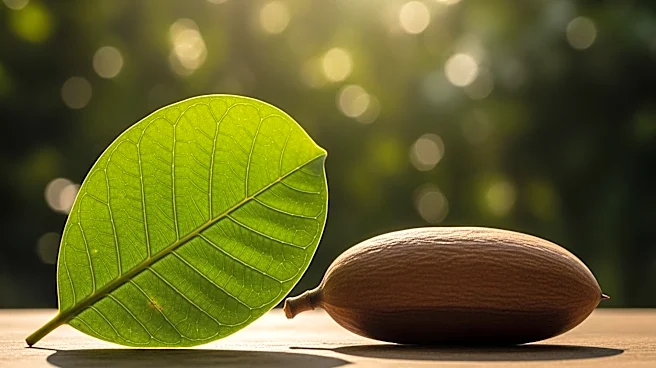
at smaller sizes. Its leaves are pinnate, measuring 15 cm long and 6–7 cm broad, with 11-15 leaflets. The tree produces bicolored red and yellow flowers, each 3–4 cm long, arranged in racemes 6 cm long. These vibrant flowers add to the tree's aesthetic value, making it a popular choice for ornamental planting.
The fruit of the black bean tree is a cylindrical pod, ranging from 12 to 20 cm in length and 4 to 6 cm in diameter. Inside, the pod is divided by a spongy substance into one to five cells, each containing a large chestnut-like seed. These seeds are notable for their size and resemblance to chestnuts, which is reflected in the genus name Castanospermum, derived from Latin and Ancient Greek words meaning 'chestnut seed.'
Habitat and Distribution
Castanospermum australe is native to eastern Australia, specifically Queensland and northeastern New South Wales, and extends to the islands of Vanuatu and New Caledonia. It thrives in rainforest and gallery forest environments, particularly along watercourses. The tree's ability to grow at altitudes from sea level to about 800 meters demonstrates its adaptability to various ecological conditions.
The seeds of the black bean tree are large and toxic to most animals, which limits their dispersal by fauna. However, the seeds can float and are dispersed by water, retaining their viability even after immersion in salt water. This characteristic explains their distribution along coastlines and waterways, highlighting the tree's ecological resilience.
Ornamental and Practical Uses
Beyond its ecological role, the black bean tree is valued for its ornamental qualities. It is widely cultivated as a shade tree in parks across Australia and other countries, including Asia, Europe, and America. The tree's aesthetic appeal, combined with its practical uses, such as the timber for crafting tools, underscores its versatility.
The timber of the black bean tree resembles walnut, is soft, fine-grained, and takes a good polish, making it suitable for various applications. Its durability rating above-ground is over 40 years, further enhancing its value as a resource for crafting and construction.