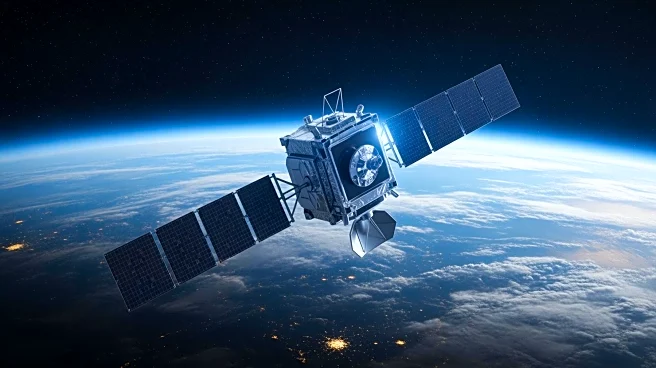

Launched on December 12, 1984, NOAA-9 was a pivotal satellite in the realm of weather forecasting. Operated by the National Oceanic and Atmospheric Administration (NOAA), it was part of the Advanced TIROS-N
series, designed to enhance the accuracy and detail of weather analysis. NOAA-9's mission extended beyond its planned duration, providing over 13 years of valuable data that significantly advanced satellite-based weather forecasting.
Enhancing Weather Analysis
NOAA-9 was equipped with a suite of advanced instruments that revolutionized weather analysis. The Advanced Very High Resolution Radiometer (AVHRR/2) played a crucial role in observing global cloud cover and sea-surface temperatures. This instrument provided high-resolution imagery, enabling meteorologists to track weather patterns with unprecedented precision.
The TIROS Operational Vertical Sounder (TOVS) suite, consisting of the High Resolution Infrared Radiation Sounder 2 (HIRS/2), the Stratospheric Sounding Unit (SSU), and the Microwave Sounding Unit (MSU), offered detailed atmospheric temperature and humidity profiles. These measurements were essential for accurate weather predictions, allowing for better understanding of atmospheric dynamics.
Contributions to Climate Science
Beyond weather forecasting, NOAA-9 contributed to climate science through the Earth Radiation Budget Experiment (ERBE). This experiment measured the energy exchange between Earth and space, providing insights into climate prediction and radiation budget anomalies. The Solar Backscattered Ultraviolet Radiometer (SBUV/2) mapped ozone concentrations, enhancing understanding of atmospheric composition.
The satellite's data collection capabilities extended to emergency response systems, with the Search and Rescue Satellite-Aided Tracking System (SARSAT) detecting and locating distress signals. This system improved rescue operations by providing real-time data to authorities, showcasing the satellite's multifaceted impact.
Legacy and Influence
NOAA-9's extended mission duration allowed it to overcome challenges such as instrument failures, including the ERBE scanner malfunction in 1987. Despite these setbacks, the satellite continued to provide valuable data, influencing the design and operation of subsequent missions in the TIROS-N/NOAA series.
The satellite's contributions to weather forecasting and climate science have left a lasting legacy. NOAA-9 demonstrated the potential of satellite-based observation, paving the way for future advancements in meteorological technology. Its success set a standard for precision and reliability, influencing the development of subsequent weather satellites and enhancing the accuracy of weather predictions worldwide.