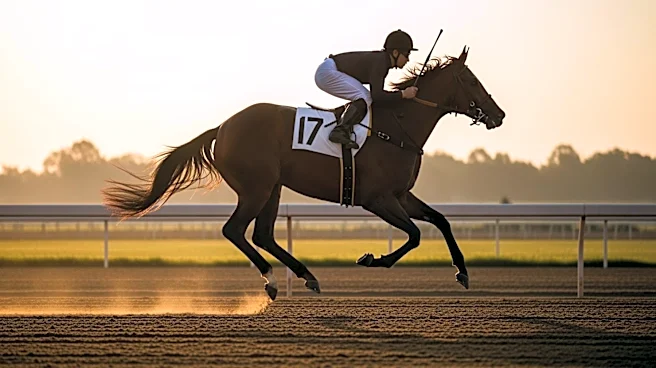




Apollo, a chestnut gelding foaled in 1879, became a celebrated figure in American horse racing history. Known for his remarkable victory in the 1882 Kentucky Derby, Apollo's life and career offer a fascinating glimpse into the world of 19th-century Thoroughbred racing. His achievements on the track and his unique background make him a standout figure in the annals of horse racing.
Early Life and Background
Apollo was bred by Daniel Swigert, a prominent figure in the horse racing
community who later founded Elmendorf Farm. Apollo's dam, Rebecca T. Price, was an accomplished mare who had previously produced a stakes winner. At the age of 20, she was bred to two stallions, Ashstead and Lever, resulting in Apollo's birth. Due to the lack of DNA testing at the time, Apollo's paternity was uncertain, with both stallions listed as potential sires. However, many believed that Lever was his sire due to Apollo's resemblance to Lever's sire, Lexington.
Originally trained by Henry Brown, Apollo suffered an injury as a two-year-old, which prevented him from racing at that age. He was subsequently sold to trainer Green B. Morris and his partner James D. Patton for $1,200. This change in ownership marked the beginning of Apollo's successful racing career.
Racing Achievements
Apollo's racing career began in earnest as a three-year-old in 1882. He made his debut in New Orleans, finishing second in the Pickwick Stakes and in two one-mile heats. He secured his first victory in the Cottrill Stakes, setting the stage for his entry into the Kentucky Derby.
Apollo's performance in the 1882 Kentucky Derby was a defining moment in his career. Despite being an underdog with 10-1 odds, he won the race with a dramatic finish, overtaking the favorite, Runnymede, in the final strides. This victory was part of a successful season in which Apollo won ten races from 21 starts.
As a four-year-old, Apollo continued to excel, racing 30 times and winning 14 races, including the Merchant's Stakes. His ability to compete at a high level across numerous races demonstrated his endurance and skill as a racehorse.
Legacy and Retirement
Apollo's impact on horse racing extends beyond his victories. His achievement of winning the Kentucky Derby without racing as a two-year-old was unmatched until 2018, highlighting his unique place in racing history. Apollo's career record of 55 starts, with 24 wins, 15 second-place finishes, and 9 third-place finishes, underscores his consistency and competitiveness.
After an injury as a five-year-old, Apollo was retired from racing and given to a friend of his owner's wife for use as a saddle horse. He passed away in November 1887 from lockjaw. Apollo's legacy lives on as a symbol of resilience and the unexpected triumphs that make horse racing an enduring and captivating sport.