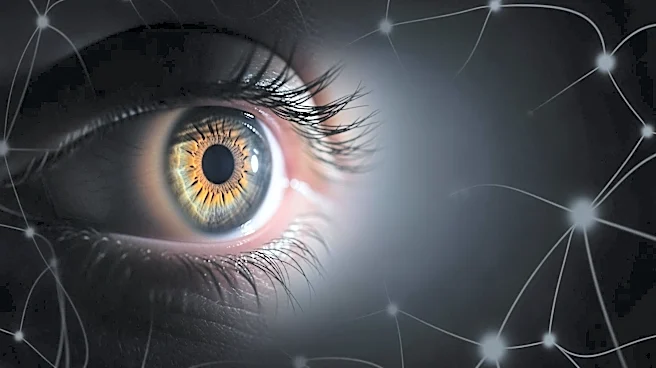





Dark adaptation is a fascinating process that allows the human eye to adjust to low-light conditions. This ability is crucial for activities such as night driving or moving around in dimly lit environments. The process involves complex interactions between the two types of photoreceptor cells in the retina: rods and cones. This article explores the science behind dark adaptation, focusing on how these cells work together to enhance our night vision.
The Role of Rods in Dark Adaptation
Rods are the primary photoreceptor cells responsible for vision in low-light conditions. They are highly sensitive to light and can detect even the faintest of signals, making them essential for night vision. There are approximately 91 million rod cells in the human retina, distributed throughout most of the retina except for the fovea centralis.
During dark adaptation, rods undergo a process called photopigment regeneration. This involves the conversion of the photopigment rhodopsin from its inactive form back to its active form, allowing rods to become more sensitive to light. This regeneration process is relatively slow, taking up to two hours for rods to reach maximum sensitivity. However, once fully adapted, rods enable us to see in very low-light conditions, albeit in shades of gray.
The Contribution of Cones to Dark Adaptation
While rods are the main players in dark adaptation, cones also contribute to this process, particularly in the initial stages. Cones are less sensitive to light than rods but are responsible for color vision and visual acuity. During the first few minutes of dark adaptation, cones quickly adjust to the lower light levels, allowing us to see in dim conditions before rods take over.
The rapid adaptation of cones is due to the quick regeneration of their photopigments. This initial adjustment period is crucial for activities that require a quick transition from bright to dim environments, such as entering a dark theater from a sunny street. Although cones do not provide the same level of sensitivity as rods, their contribution to dark adaptation is essential for maintaining some level of visual function in low-light settings.
The Importance of Dark Adaptation
Dark adaptation is a vital function of the human visual system, enabling us to navigate and perform tasks in varying lighting conditions. The ability to adapt to darkness is not only important for safety but also enhances our overall quality of life. For instance, it allows us to enjoy nighttime activities, such as stargazing or attending evening events.
Moreover, understanding the mechanisms of dark adaptation has implications for various fields, including medicine and technology. Research into this process can lead to advancements in treating visual impairments and developing technologies that enhance night vision.
In summary, dark adaptation is a complex process involving the interplay of rods and cones. While rods are the primary contributors to night vision, cones play a crucial role in the initial stages of adaptation. This remarkable ability of the human eye underscores the sophistication of our visual system, allowing us to see in a wide range of lighting conditions.