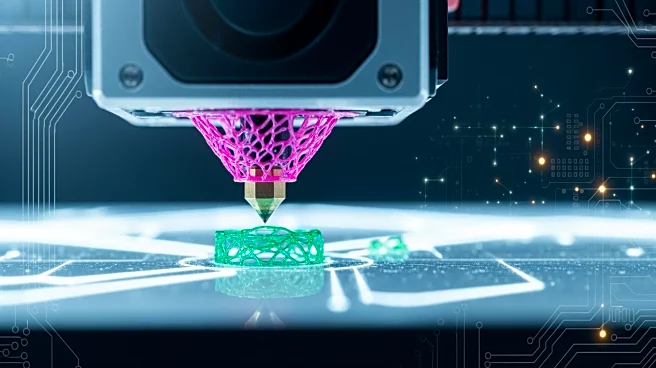




Printing has evolved significantly since its inception, with technological innovations driving the industry forward. This article examines the key technological advancements in printing, highlighting how they have transformed the production and distribution of printed materials.
Early Innovations
The earliest form of printing involved ink rubbings from stone tablets, a method that laid the groundwork for more advanced techniques. Woodblock printing, which emerged in the sixth
century, allowed for the reproduction of text and images by pressing an inked image onto paper. This technique was widely used in East Asia and marked a significant step forward in printing technology.
The introduction of movable type by Bi Sheng around 1040 was a major innovation, allowing for more flexible printing processes. This advancement paved the way for the development of the printing press by Johannes Gutenberg in the 15th century, which revolutionized the industry.
The Printing Press
Gutenberg's printing press utilized movable type and a screw press mechanism, drastically improving the efficiency and quality of printed materials. This innovation enabled the mass production of books, making them more accessible to the public and fueling the spread of knowledge during the Renaissance.
The printing press was capable of producing up to 3,600 pages per workday, a remarkable increase compared to previous methods. Its impact on society was profound, facilitating the dissemination of information and ideas across Europe.
Modern Printing Technologies
The 19th century saw further advancements in printing technology with the introduction of steam-powered rotary presses, which allowed for printing on an industrial scale. These presses increased the speed and volume of production, making printed materials more widely available.
Today, printing encompasses a variety of techniques, including digital printing, offset lithography, and screen printing. Each method offers unique advantages, catering to different needs and applications. Digital printing, for instance, allows for quick and cost-effective production of small print runs, while offset lithography is ideal for high-quality, large-volume printing.
Technological advancements in printing have been instrumental in shaping the industry, enabling the widespread distribution of information and fostering global communication. As technology continues to evolve, the printing industry will undoubtedly see further innovations that will continue to transform the way we produce and consume printed materials.