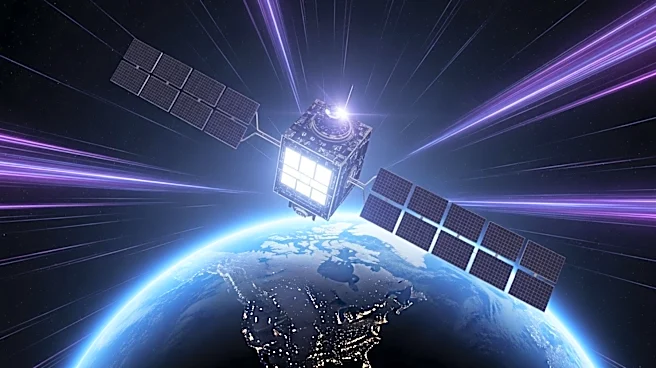



Explorer 11, launched by NASA in 1961, marked a significant milestone in space exploration as the first satellite to carry a gamma-ray telescope. This mission laid the groundwork for space gamma-ray astronomy, providing valuable data on cosmic phenomena. The satellite's journey and its contributions to science are noteworthy for their pioneering nature and the challenges faced during its operation.
Launch Details and Objectives
Explorer 11 was launched on April 27, 1961, using
a Juno II rocket from Cape Canaveral. The satellite was designed to detect high-energy gamma rays and map their direction, focusing on areas such as the plane of the galaxy, the Galactic Center, and the Sun. It aimed to relate these measurements to cosmic-ray flux density and the density of interstellar matter. Additionally, Explorer 11 sought to measure the high-energy gamma-ray albedo of Earth's atmosphere.
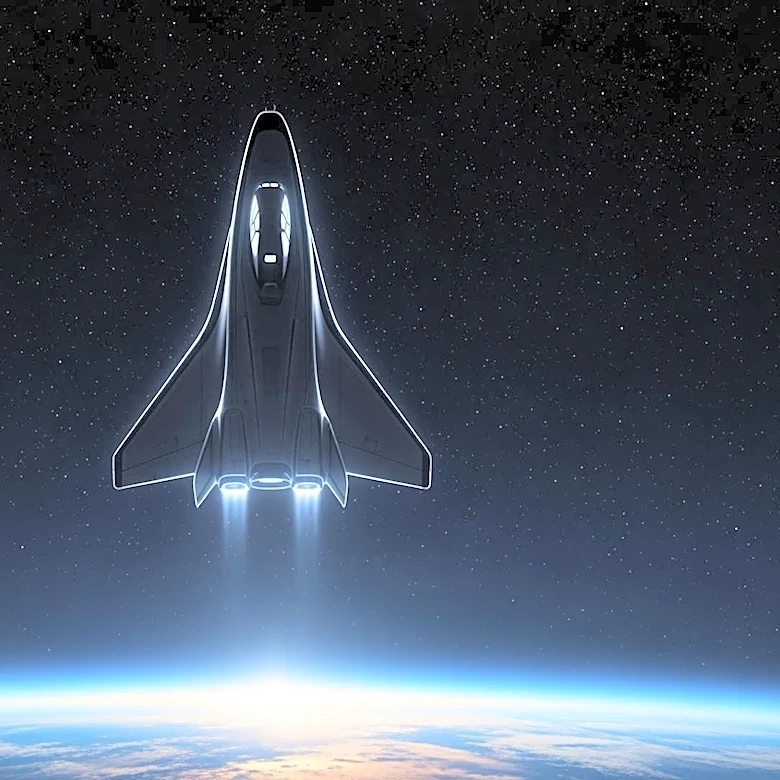
The satellite achieved an orbit with an apogee of 1,786 km and a perigee of 486 km, with a period of 108.10 minutes and an inclination of 28.90 degrees. Its design featured a spin-stabilized octagonal aluminum box mounted on a cylinder, allowing for stable motion and effective data collection.
Instrumentation and Data Collection
Explorer 11 was equipped with a gamma-ray telescope developed by the Massachusetts Institute of Technology (MIT). The telescope used a combination of a crystal sandwich detector and a Cherenkov counter to measure the arrival directions and energies of gamma rays. Despite the challenges posed by a higher-than-planned orbit and the failure of the onboard tape recorder, the satellite managed to record 22 gamma-ray events and approximately 22,000 cosmic radiation events during its mission.
The telescope's design included an anticoincidence plastic shield, layers of Sodium iodide and Caesium iodide crystals, and a cylindrical Cherenkov detector. This setup allowed for the detection of cosmic gamma rays greater than 50 MeV and provided directional information on charged particles.
Challenges and Legacy
Explorer 11 faced several challenges during its mission, including power supply problems that ended its science mission on November 17, 1961. Despite these issues, the satellite's contributions to gamma-ray astronomy were significant. It provided upper limits on gamma-ray events, which were lower than those obtained from previous balloon-borne experiments.
The mission paved the way for future gamma-ray telescopes, such as the improved version flown on the Orbiting Solar Observatory 3 in 1967. Explorer 11's legacy continues to influence space exploration and the study of cosmic phenomena, highlighting the importance of early satellite missions in advancing scientific knowledge.