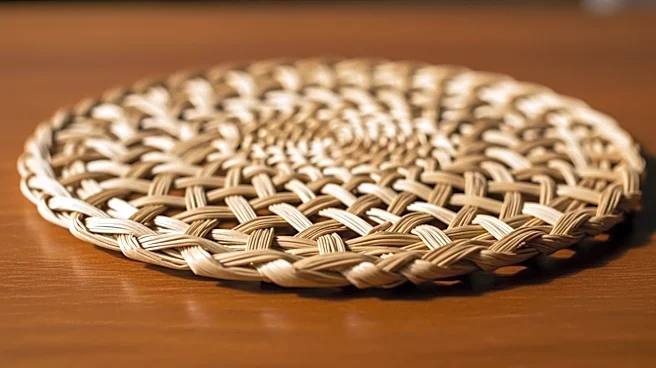







Mary Dixon Kies revolutionized the hat-making industry with her innovative technique of weaving straw with silk and thread. This invention, patented in 1809, not only provided a solution to a pressing economic need but also demonstrated the potential of domestic manufacturing during a time of international trade restrictions.
The Economic Context of Kies' Invention
During the early 19th century, the United States faced significant economic challenges due to the Napoleonic Wars. The embargo
on trade with France and Great Britain created a demand for American-made goods, including hats. Kies' invention came at a crucial time, offering a method to produce durable and affordable hats domestically.
Her technique involved weaving straw with silk and thread, which resulted in hats that were sturdier than those made with traditional methods. This innovation was not only cost-effective but also met the market's demand for quality products. In 1810, Massachusetts alone produced over $500,000 worth of straw bonnets, illustrating the economic impact of Kies' invention.
Technical Aspects of the Straw-Weaving Technique
Kies' method of weaving straw with silk and thread was a significant advancement in the hat-making industry. By using silk instead of straw in the seams, the hats were more durable and held their shape better. This technical improvement made her hats more desirable and practical for everyday use.
The adoption of Kies' technique by many businesses in the hat-manufacturing market further underscores its effectiveness. Even after her patent was destroyed in the fire of the Patent Office in 1836, manufacturers continued to use her method, highlighting its lasting impact on the industry.
The Legacy of Kies' Innovation
While Kies did not achieve financial success from her invention, her contribution to the hat-making industry and the broader field of invention is undeniable. Her technique not only addressed an economic need but also demonstrated the potential for innovation in domestic manufacturing.
Kies' legacy is also reflected in her recognition by the National Inventors Hall of Fame in 2006. This honor acknowledges her role in advancing the field of invention and her impact on the economy during a challenging period in U.S. history. Her story serves as a testament to the power of innovation and the importance of recognizing the contributions of women in the field of invention.