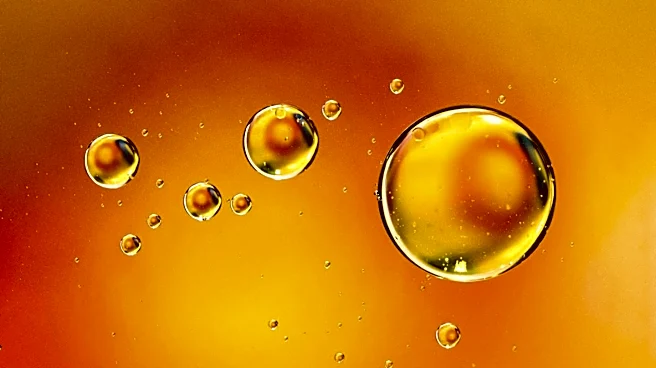










Emulsions are fascinating mixtures that play a crucial role in various industries, from food to cosmetics. At their core, emulsions are mixtures of two or more liquids that typically do not mix well, such as oil and water. This article delves into the structure and properties of emulsions, providing a foundational understanding of how they work and why they are important.
The Structure of Emulsions
An emulsion consists of two phases: the dispersed phase and the continuous phase.
In simple terms, one liquid is dispersed in another. For example, in an oil-in-water emulsion, oil droplets are dispersed in water, while in a water-in-oil emulsion, water droplets are dispersed in oil. The boundary between these phases is known as the interface, which plays a critical role in the stability and behavior of the emulsion.
The size of the droplets in the dispersed phase can vary significantly, typically ranging from 10 nanometers to 100 micrometers. This size range means that emulsions can sometimes exceed the usual size limits for colloidal particles. The droplets in an emulsion are usually spherical, and their distribution within the continuous phase is often random, contributing to the emulsion's overall appearance and properties.
Appearance and Optical Properties
Emulsions often have a cloudy appearance due to the scattering of light at the many interfaces between the dispersed and continuous phases. This scattering can cause emulsions to appear white when all light is scattered equally. However, if the emulsion is dilute, it may appear bluer due to the Tyndall effect, where shorter wavelengths of light are scattered more. Conversely, concentrated emulsions may appear more yellow as longer wavelengths are scattered.
Special classes of emulsions, such as microemulsions and nanoemulsions, have droplet sizes below 100 nanometers and can appear translucent. This translucency occurs because the droplets are too small to scatter visible light effectively, allowing light to pass through without significant scattering.
Stability and Instability in Emulsions
Emulsions are inherently unstable, meaning they do not form spontaneously and require energy input, such as shaking or stirring, to form. Over time, emulsions tend to separate back into their original phases. However, certain emulsions, like microemulsions, are thermodynamically stable, while others, like nanoemulsions, are kinetically stable.
The stability of an emulsion can be influenced by several factors, including the type of emulsifier used and the volume fraction of the phases. Emulsifiers are substances that stabilize emulsions by reducing the surface tension at the interface, preventing the droplets from coalescing. Understanding these properties is essential for effectively utilizing emulsions in various applications, from food production to pharmaceuticals.