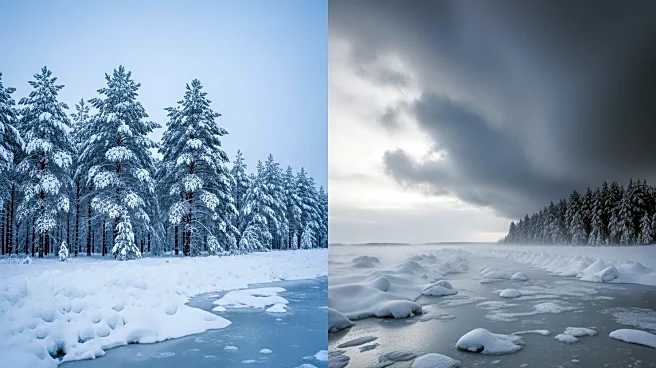




The 2025–26 North American winter has been marked by a series of extreme weather events that have captured the attention of meteorologists and the public alike. From record-breaking snowfalls to powerful blizzards, this winter season has been anything but ordinary. The influence of a weak La Niña pattern has played a significant role in shaping the weather patterns across the continent, leading to a variety of unusual and severe weather conditions.
Record-Breaking Snowfalls
One of the most notable events of the 2025–26 winter season was the record-breaking snowfall in Chicago. On November 30, 2025, Chicago experienced its snowiest November day on record, with 8.4 inches of snow falling at O'Hare International Airport. This snowfall not only broke the previous daily record but also caused significant disruptions to travel and daily life in the city. The heavy snowfall was part of a larger winter storm that affected much of the Midwest, setting early-season snowfall records across the region.
The impact of these snowfalls was felt beyond just the immediate inconvenience. The accumulation of snow led to hazardous road conditions, resulting in numerous traffic accidents and delays. Airports across the Midwest experienced cancellations and delays, further complicating travel plans for many during the busy holiday season.
The Influence of La Niña
The weather patterns of the 2025–26 winter have been heavily influenced by a weak La Niña. This climate phenomenon is characterized by cooler than average sea surface temperatures in the central and eastern Pacific Ocean, which can have far-reaching effects on global weather patterns. In North America, La Niña typically brings colder and wetter conditions to the northern parts of the continent, while the southern regions experience warmer and drier weather.
This winter, the La Niña pattern has contributed to colder than average temperatures in the Northwestern United States, while the southern and eastern parts of the country have seen warmer conditions. The precipitation patterns have also been affected, with the northwest and central United States experiencing wetter than average conditions, leading to increased snowfall and storm activity.
Blizzards and Cold Waves
In addition to record snowfalls, the 2025–26 winter has been marked by several significant blizzards and cold waves. One of the most impactful events was a blizzard that struck the Upper Midwest during Thanksgiving week, bringing heavy snow and high winds to the region. This storm caused widespread road closures and power outages, highlighting the challenges of dealing with severe winter weather.
Cold waves have also been a feature of this winter, with temperatures plunging to near-record lows in many areas. The passage of arctic fronts has brought frigid air masses southward, affecting millions of people across the eastern United States. These cold snaps have led to freeze warnings and advisories being issued as far south as Florida, underscoring the widespread impact of this winter's extreme weather.