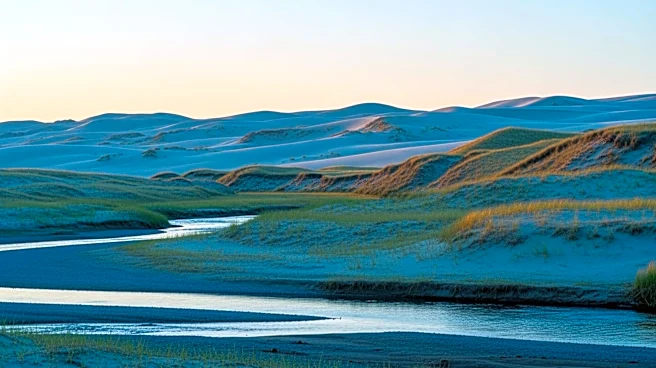







Kobuk Valley National Park, located in northwestern Alaska, offers a unique glimpse into a pristine wilderness that remains largely untouched by human development. Established in 1980, this park is known for its vast landscapes, including the Great Kobuk Sand Dunes and the migration routes of the Western Arctic caribou herd. With no roads or trails, visitors must be prepared for a true backcountry experience, bringing all necessary gear for activities
like camping, hiking, and dog sledding.
The Remote Beauty of Kobuk Valley
Kobuk Valley National Park is situated about 25 miles north of the Arctic Circle, making it one of the most remote national parks in the United States. The park covers an area of 1,750,716 acres, which is slightly larger than the state of Delaware. This vast expanse of wilderness is characterized by its lack of infrastructure, as there are no roads or designated trails within the park. Visitors typically arrive via chartered air taxi from nearby towns such as Nome, Bettles, or Kotzebue, with flights available year-round, though they are weather-dependent.
The park's isolation contributes to its status as one of the least-visited national parks in the U.S. Despite its remote location, Kobuk Valley offers a unique opportunity to experience the natural beauty of the Arctic region. The park is part of a larger ecosystem that includes the Selawik National Wildlife Refuge and the Noatak National Preserve, providing a critical habitat for a variety of wildlife species.
The Great Kobuk Sand Dunes
One of the most striking features of Kobuk Valley National Park is the Great Kobuk Sand Dunes. These dunes, along with the Little Kobuk Sand Dunes and the Hunt River Dunes, are remnants of a much larger dune field that once covered the area following the retreat of Pleistocene glaciers. Today, the active dune fields cover about 20,500 acres, making them the largest active Arctic dune field in North America.
The formation of these dunes is a result of outwash deposits from glaciers combined with strong winds. Over time, the dunes have become mostly covered by forest and tundra, but they remain a fascinating natural feature. The Great Kobuk Sand Dunes have even attracted the attention of NASA, which has funded studies of the dunes as an analog for Martian polar dunes.
Wildlife and Ecology
Kobuk Valley National Park is home to a diverse array of wildlife, typical of Arctic and subarctic regions. The park lies in a transition zone between boreal forest and tundra, providing a habitat for species such as caribou, moose, and various fish species. The Western Arctic caribou herd, numbering around 400,000, migrates through the park annually, crossing the Kobuk River as part of their journey between winter and summer grounds.
In addition to caribou, the park is inhabited by other large mammals, including wolves, Arctic and red foxes, black and brown bears, and Dall sheep. Smaller mammals such as wolverines, martens, and snowshoe hares also thrive in the park's diverse ecosystems. The park's rivers and streams support a variety of fish species, including several types of salmon and Arctic char, making it an important area for both wildlife and the subsistence lifestyle of the local Inupiat people.