
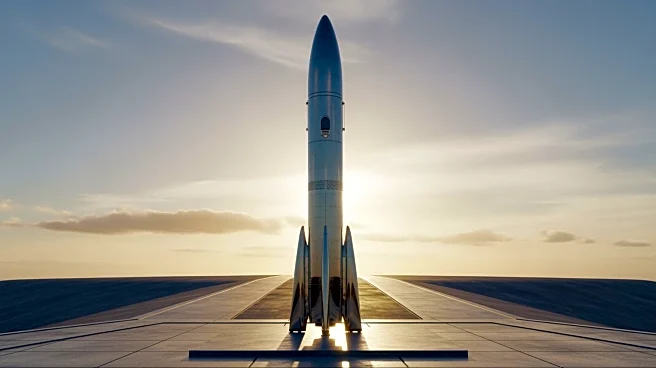


Apollo 4, launched on November 9, 1967, was a crucial mission in the Apollo program, serving as the first uncrewed test flight of the Saturn V rocket. This mission was instrumental in demonstrating the capabilities of the launch vehicle that would eventually take astronauts to the Moon, paving the way for the program's ambitious goal of lunar exploration.
Demonstrating the Saturn V's Capabilities
The Saturn V rocket was a key component of the Apollo program, designed to propel astronauts beyond
Earth's orbit and towards the Moon. Apollo 4 was the first flight of this massive launch vehicle, which was the largest ever attempted at the time. The mission employed an "all-up" testing approach, meaning all stages of the rocket were fully functional on the initial flight.
This approach allowed NASA to streamline the program and meet the ambitious timeline set by President John F. Kennedy, who had proposed landing an astronaut on the Moon by the end of the decade. Despite initial concerns, the approach proved successful, with Apollo 4 achieving all its objectives and demonstrating the Saturn V's capabilities.
Overcoming Challenges and Delays
Apollo 4's launch was initially planned for early 1967 but faced several delays due to technical issues and the tragic Apollo 1 fire. The fire, which claimed the lives of three astronauts, prompted additional inspections and modifications to ensure the safety of the spacecraft. These challenges underscored the complexity and risks associated with space exploration.
Despite these setbacks, the mission proceeded successfully, achieving all its objectives. The Saturn V's performance was exemplary, with each stage functioning as expected. The mission's success provided NASA with the confidence needed to proceed with crewed lunar missions, bringing the goal of landing astronauts on the Moon closer to reality.
The Legacy of Apollo 4
Apollo 4's successful demonstration of the Saturn V rocket was a critical step in the Apollo program. It validated the design and capabilities of the launch vehicle, paving the way for subsequent missions that would eventually lead to the historic Apollo 11 Moon landing. The mission's success also boosted public confidence in NASA's ability to achieve its ambitious goals.
The legacy of Apollo 4 extends beyond its technical achievements. It represents a moment of triumph in the face of adversity, showcasing the resilience and determination of the engineers and scientists who worked tirelessly to overcome challenges. As the first flight from Kennedy Space Center's Launch Complex 39, Apollo 4 set the stage for future missions that would continue to push the boundaries of human exploration.