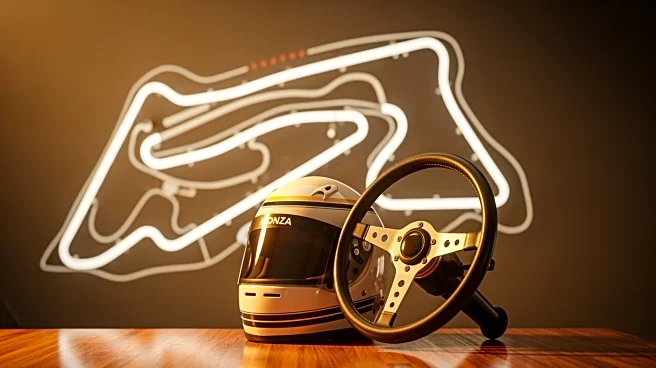




The Monza Circuit, officially known as the Autodromo Nazionale Monza, is one of the most iconic race tracks in the world. Located near the city of Monza, north of Milan, Italy, it has a rich history that dates back to its construction in 1922. Known as the "Temple of Speed," Monza has been the site of numerous memorable races and has undergone significant changes over the years to adapt to the evolving world of motorsport.
Early Beginnings and Construction
The Monza Circuit was built
in 1922, making it the third purpose-built motor racing circuit in the world, following Brooklands in England and Indianapolis in the United States. It was constructed in just 110 days by 3,500 workers, financed by the Milan Automobile Club. The initial design featured a 4.490 km oval track and a 5.500 km road course, which could be combined to form a 10 km circuit. This ambitious project was part of a broader effort to promote motor racing and sport in Italy.
The circuit was officially opened on September 3, 1922, and hosted its first race, the second Italian Grand Prix, a week later. Monza's proximity to Milan, Italy's economic hub, made it an ideal location for racing events. However, the early years were not without tragedy. In 1928, a serious accident during the Italian Grand Prix resulted in the deaths of driver Emilio Materassi and 27 spectators, leading to a temporary halt in Grand Prix racing at Monza.
Mid-Century Developments
In the 1950s, Monza underwent significant changes to accommodate the increasing speeds of modern racing cars. In 1954, a new high-speed oval with banked curves was added, allowing the circuit to be combined with the road course to recreate the original 10 km layout. This made Monza one of the fastest tracks in the world, with Formula One cars reaching average speeds of over 135 mph.
However, the high speeds also brought increased risks. The 1961 Italian Grand Prix was marred by a tragic accident that claimed the life of Wolfgang von Trips and 15 spectators. This incident led to the decision to stop using the high-speed oval for Formula One races. The circuit continued to evolve, with the introduction of chicanes in the 1970s to slow down the cars and improve safety.
Modern Era and Safety Improvements
The late 20th and early 21st centuries saw further modifications to Monza to enhance safety and accommodate the latest racing technologies. In 1972, two chicanes were added to reduce speeds, and additional safety measures were implemented throughout the 1980s and 1990s. These included new kerbs, extended run-off areas, and improved barriers.
In 2000, the first chicane was reconfigured to reduce the risk of accidents at the start of races. Despite these changes, Monza has retained its reputation as a high-speed circuit, with Formula One cars reaching top speeds of over 230 mph. The circuit's layout, with its long straights and tight chicanes, continues to challenge drivers and thrill fans.
Monza's commitment to safety and modernization has ensured its place on the Formula One calendar, with the Italian Grand Prix being held at the circuit almost every year since 1950. The track's rich history and unique characteristics make it a favorite among drivers and fans alike, cementing its status as a legendary venue in the world of motorsport.