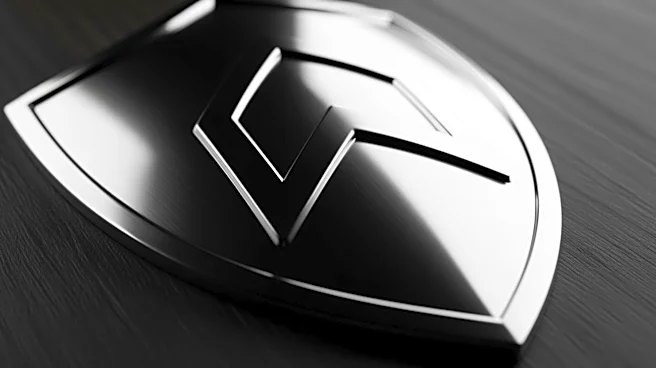






The chevron, a simple yet powerful V-shaped symbol, has played a significant role in heraldry and military insignia throughout history. Its geometric simplicity and adaptability have made it a popular choice for representing rank and identity. This article explores the chevron's use in heraldic designs and its significance as a military insignia.
Heraldic Significance
In heraldry, the chevron is one of the heraldic ordinaries, which are basic geometric figures forming the foundation
of many coats of arms. The construction of a chevron involves selecting a visually appealing angle, such as the golden angle, to enhance its aesthetic appeal. Artists can modify the chevron by inverting it or reducing its size, creating a diminutive known as a chevronel.
The chevron's heraldic use dates back to early history, particularly in regions like Normandy and Scandinavia. In Scandinavia, the chevron is referred to as sparre, with early examples appearing in the arms of Arvid Gustavsson Sparre. Its presence in heraldic designs highlights its versatility and enduring appeal as a symbol of identity and lineage.
Military Insignia
The chevron is widely recognized as a military insignia, used to denote rank and length of service. In Western European tradition, chevrons are used for non-commissioned officer ranks, with variations in orientation and number indicating different levels. For example, the United States Army and Marines use chevrons proper, while the Air Force, Navy, and Coast Guard use inverted chevrons.
In the British Army, Royal Marines, and Royal Air Force, chevrons are worn point down to denote non-commissioned officer rank. The number of chevrons varies, with one for lance corporal, two for corporal, and three for sergeant. Additional symbols, such as a crown, are used to indicate higher ranks like staff sergeant or flight sergeant.
Broader Applications
Beyond heraldry and military insignia, the chevron appears in various other contexts. In vexillology, it serves as a V-shaped stripe on flags, often pointing toward the fly or rising from the base. The chevron's adaptability allows it to be narrow or broad, single or repeated, and oriented in different directions.
The chevron's use in modern symbols, such as road signs and corporate logos, further demonstrates its versatility and enduring significance. Its ability to convey identity, rank, and direction makes it a timeless symbol with broad applications.