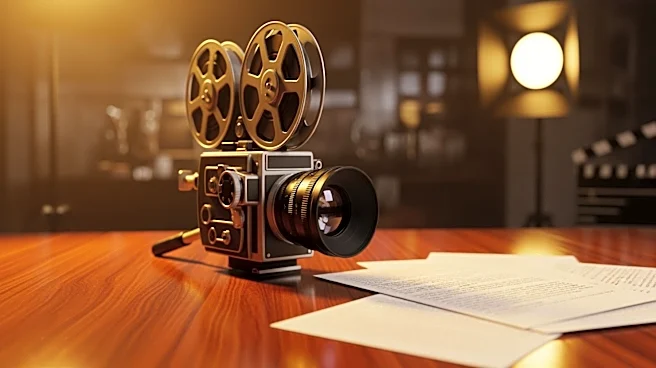





The 1974 film 'The Conversation,' directed by Francis Ford Coppola, stands as a significant work in the realm of neo-noir mystery thrillers. This article delves into the intricate production process and creative decisions that shaped this cinematic masterpiece. From its inception to its critical acclaim, 'The Conversation' showcases the meticulous craftsmanship of Coppola and his team.
The Genesis of 'The Conversation'
Francis Ford Coppola, already renowned for his work on 'The Godfather,'
embarked on 'The Conversation' with a vision to explore themes of surveillance and privacy. The film was written, co-produced, and directed by Coppola, who drew inspiration from Michelangelo Antonioni's 'Blowup.' This influence is evident in the film's exploration of perception versus reality and the moral dilemmas faced by its protagonist, Harry Caul.
The production of 'The Conversation' began in late 1972, with principal photography wrapping up by February 1973. Coppola's choice of Gene Hackman to portray Harry Caul was pivotal. Hackman, known for his outgoing personality, had to adapt to the socially awkward and introverted character of Caul. This transformation was challenging for Hackman, but it ultimately resulted in one of his most acclaimed performances.
Challenges and Innovations in Filmmaking
The production of 'The Conversation' was not without its challenges. The original cinematographer, Haskell Wexler, was replaced by Bill Butler due to creative differences with Coppola. Despite this setback, the film's visual style remained consistent, with Butler reshooting most of Wexler's footage except for the complex surveillance scene in Union Square.
Walter Murch, the supervising editor and sound designer, played a crucial role in shaping the film's narrative and auditory experience. Murch had significant creative freedom during the editing process, as Coppola was simultaneously working on 'The Godfather Part II.' The film's sound design, particularly the use of David Shire's piano score, was integral to conveying the tension and paranoia central to the story.
Critical Acclaim and Legacy
Upon its release, 'The Conversation' received critical acclaim and was awarded the Palme d'Or at the 1974 Cannes Film Festival. It was also nominated for three Academy Awards, including Best Picture. The film's exploration of surveillance resonated with audiences, especially in the context of the Watergate scandal, although Coppola maintained that any parallels were coincidental.
In 1995, 'The Conversation' was selected for preservation in the United States National Film Registry, recognized for its cultural, historical, and aesthetic significance. The film's legacy endures, with its themes remaining relevant in today's discussions about privacy and technology. Gene Hackman himself has cited 'The Conversation' as one of his favorite performances, a testament to the film's enduring impact on both audiences and its creators.