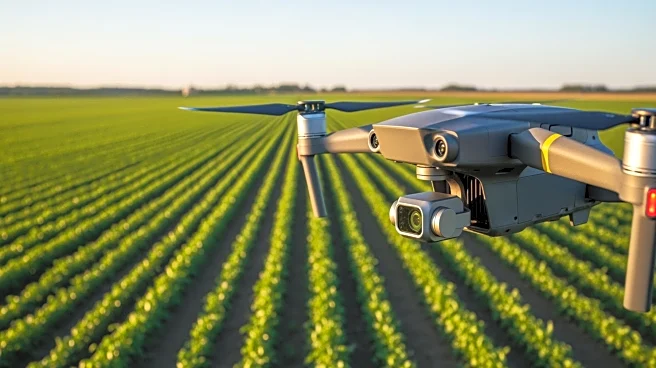

Precision agriculture represents a significant shift in farming practices, integrating technology with traditional methods to enhance productivity and sustainability. This approach has evolved over time,
driven by technological advancements and the need to address global food demands. By examining the historical development of precision agriculture, we can better understand its impact on modern farming and its potential for future growth.
Early Beginnings and Technological Integration
The concept of precision agriculture began to take shape with the advent of mechanized farming in the early 20th century. During this period, farmers transitioned from manual labor to using machinery, which significantly increased productivity. The first agricultural revolution, marked by mechanization, allowed farmers to feed more people than ever before. This laid the groundwork for subsequent innovations in farming technology.
In the 1960s, the Green Revolution introduced new methods of genetic modification, further boosting agricultural output. Precision agriculture emerged as part of the third wave of agricultural revolutions, incorporating satellite monitoring and GPS technology to optimize resource use. These advancements enabled farmers to make data-driven decisions, improving efficiency and reducing environmental impact.
The Role of GPS and Satellite Technology
GPS and satellite technology have been pivotal in the development of precision agriculture. These tools allow farmers to accurately map fields and monitor crop health, leading to more precise application of inputs like water and fertilizers. By analyzing spatial variability within fields, farmers can tailor their practices to the specific needs of their crops, enhancing yield and minimizing waste.
Satellite imagery provides valuable insights into terrain attributes and soil properties, which affect crop growth and water distribution. This information is crucial for developing decision support systems that optimize farm management. As technology continues to advance, the integration of real-time sensors and unmanned aerial vehicles further enhances the capabilities of precision agriculture.
Future Prospects and Challenges
Looking ahead, precision agriculture is poised to play a critical role in meeting global food demands. By 2050, the world population is expected to reach 9.6 billion, necessitating a doubling of food production. Precision agriculture offers a solution by enabling farmers to produce more food on the same acreage, feeding up to 265 people per farmer.
However, challenges remain in the widespread adoption of precision agriculture technologies. Factors such as cost, accessibility, and the need for technical expertise can hinder implementation, particularly in developing regions. Addressing these challenges will be essential for realizing the full potential of precision agriculture and ensuring sustainable food production for future generations.