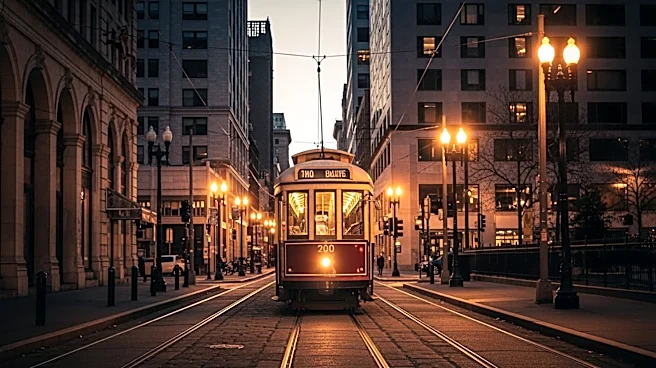








'A Streetcar Named Desire,' a play by Tennessee Williams, has seen numerous revivals since its original Broadway debut in 1947. Each revival has brought new interpretations and nuances to the play, reflecting changes in societal attitudes and theatrical styles. This article explores the significant revivals of 'A Streetcar Named Desire,' highlighting how they have contributed to the enduring legacy of this iconic work.
Early Revivals and Their Impact
The first Broadway revival of
'A Streetcar Named Desire' took place in 1973, produced by the Lincoln Center at the Vivian Beaumont Theater. This production starred Rosemary Harris as Blanche, James Farentino as Stanley, and Patricia Conolly as Stella. The revival was notable for its attempt to bring a fresh perspective to the play, focusing on the psychological depth of the characters. This production set the stage for future revivals by emphasizing the complex interplay between the characters and their emotional struggles.
In 1988, another Broadway revival at the Circle in the Square Theatre featured Aidan Quinn opposite Blythe Danner as Blanche and Frances McDormand as Stella. This production was praised for its intense performances and modern interpretation, which resonated with contemporary audiences. The revival highlighted the timeless nature of Williams' themes, such as desire, mental illness, and the clash between old and new societal values.
The 1992 Broadway Revival
One of the most acclaimed revivals occurred in 1992, starring Alec Baldwin as Stanley and Jessica Lange as Blanche. This production was staged at the Ethel Barrymore Theatre, where the original production was held. The revival was so successful that it was adapted into a television film, further cementing its impact on the play's legacy. Baldwin's portrayal of Stanley was noted for its raw intensity, while Lange's Blanche was both vulnerable and resilient, offering a new dimension to the character.
The 1992 revival was significant not only for its performances but also for its ability to attract a new generation of theatergoers. It demonstrated the play's continued relevance and its capacity to engage audiences with its powerful narrative and complex characters.
Recent Revivals and Continued Influence
In recent years, 'A Streetcar Named Desire' has continued to be revived, with productions in London and other major cities. The 2023 London production is one of the latest examples, showcasing the play's adaptability to different cultural contexts and theatrical styles. These revivals have kept the play alive in the public consciousness, allowing it to be reinterpreted and appreciated by diverse audiences.
Each revival of 'A Streetcar Named Desire' has contributed to the play's enduring legacy, proving its timeless appeal and the universal nature of its themes. As new productions continue to emerge, the play remains a vital part of the theatrical canon, inviting audiences to explore the complexities of human desire and the fragility of the human psyche.