








Apollo 10, launched on May 18, 1969, played a pivotal role in the United States' quest to land humans on the Moon. As the second crewed mission to orbit the Moon, Apollo 10 served as a "dress rehearsal" for the historic Apollo 11 mission that would follow two months later. This article explores the objectives and achievements of Apollo 10, highlighting its significance in the Apollo program.
Objectives of Apollo 10
Designated as an "F" mission, Apollo 10 was intended to test
all spacecraft components and procedures short of actual descent and landing on the lunar surface. The mission aimed to ensure that the systems and techniques required for a successful Moon landing were thoroughly vetted.
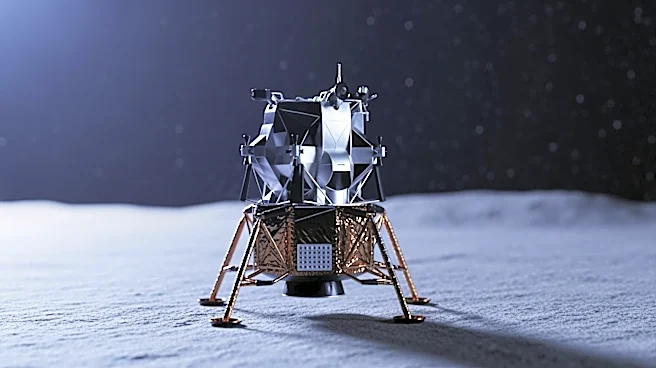
After reaching lunar orbit, astronaut John Young remained in the Command and Service Module (CSM), while astronauts Thomas Stafford and Gene Cernan piloted the Apollo Lunar Module (LM) to within 14.4 kilometers (9 miles) of the lunar surface. This was the point at which powered descent for landing would begin on a landing mission. The crew spent 61 hours and 37 minutes orbiting the Moon, with Stafford and Cernan flying the LM apart from Young in the CSM for about eight hours.
Challenges and Achievements
While NASA considered attempting the first crewed lunar landing on Apollo 10, mission planners ultimately decided that a practice flight was prudent. The crew encountered some problems during the flight, including pogo oscillations during the launch phase and a brief, uncontrolled tumble of the LM ascent stage in lunar orbit. Despite these challenges, Apollo 10 accomplished its major objectives.
Stafford and Cernan observed and photographed Apollo 11's planned landing site in the Sea of Tranquility, providing valuable data for the upcoming mission. The successful execution of Apollo 10's objectives demonstrated the readiness of the Apollo spacecraft and crew for the challenges of a lunar landing.
The Impact of Apollo 10
Apollo 10's success was instrumental in paving the way for Apollo 11's historic Moon landing. By testing the spacecraft and procedures in lunar orbit, Apollo 10 provided NASA with the confidence needed to proceed with the first crewed lunar landing.
The mission's achievements underscored the importance of thorough preparation and testing in space exploration. Apollo 10's role as a precursor to Apollo 11 highlights the incremental steps necessary to achieve monumental goals, serving as a testament to the dedication and ingenuity of the Apollo program's engineers and astronauts.