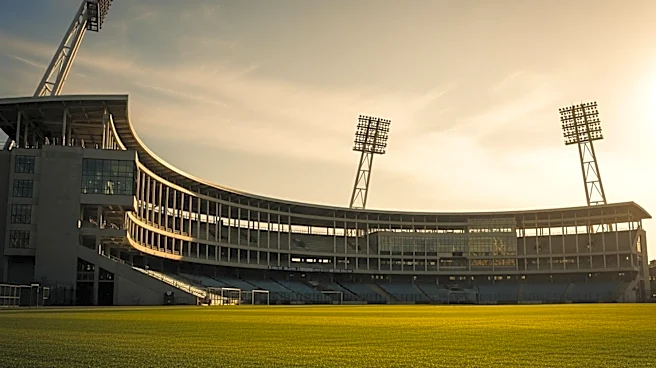







Stade Geoffroy-Guichard, located in Saint-Étienne, France, has a rich history that spans several decades. Since its opening in 1931, the stadium has undergone numerous renovations and expansions, transforming it into a modern venue capable of hosting international events. Named after Geoffroy Guichard, the founder of the Casino retail group, the stadium has become a symbol of sporting excellence in the region.
Early Years and Development
The construction of Stade Geoffroy-Guichard
began in 1930, with the stadium officially opening on September 13, 1931. Initially, the stadium had a capacity of 1,800, featuring a field surrounded by a running track and a single stand. The early years saw the stadium host local matches, with AS Saint-Étienne playing its first professional match there in 1933.
Over the years, the stadium underwent several expansions to accommodate growing crowds. By 1938, the capacity had increased to 15,000, with additional stands and earth embankments constructed to create standing sections. These changes marked the beginning of the stadium's transformation into a major sporting venue.
Major Renovations and International Events
Significant renovations took place in 1984 to prepare for the UEFA European Championship. The stadium's capacity was increased to 48,274, with improvements made to the seating and roofing. This allowed Stade Geoffroy-Guichard to host international matches, including a memorable game between France and Yugoslavia.
Further renovations occurred in 1998 for the FIFA World Cup, with the stadium's capacity adjusted to 35,616. These changes included the installation of new floodlights and the re-laying of the pitch. The stadium hosted several World Cup matches, solidifying its reputation as a premier venue for international football.
Modernization and Future Prospects
In recent years, Stade Geoffroy-Guichard has continued to evolve. Renovations completed in 2015 increased the capacity to 42,000, with improvements made to VIP areas and the addition of a panoramic restaurant. These upgrades have ensured the stadium remains competitive in hosting major events.
The stadium's modernization reflects its ongoing commitment to providing a top-tier experience for spectators and players alike. With its rich history and continued development, Stade Geoffroy-Guichard is poised to remain a key venue for future sporting events, maintaining its legacy as a cornerstone of French football.
Stade Geoffroy-Guichard's journey from a modest local stadium to a world-class venue is a testament to its enduring significance in the sporting world. Its ability to adapt and grow over the years highlights its importance in hosting international competitions and its role in the cultural fabric of Saint-Étienne.