





The Wigwam in Chicago was more than just a building; it was the epicenter of a significant political event that shaped the future of the United States. Constructed specifically for the 1860 Republican National Convention, the Wigwam was a temporary structure that played a crucial role in the nomination of Abraham Lincoln as the Republican candidate for President. This article delves into the details of the Wigwam, its construction, and its significance
during the convention.
Construction and Design of the Wigwam
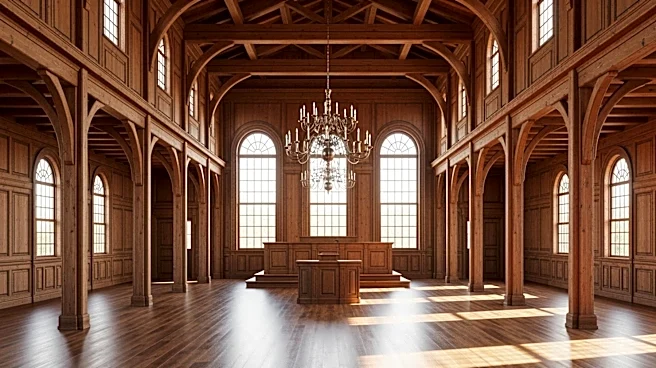
The Wigwam was built by Chicago business leaders with the intent of attracting the Republican National Convention to the city. Located at Lake Street and Market, the site was previously home to the Sauganash Hotel, Chicago's first hotel. The Wigwam was a two-story, wood-frame building designed to accommodate between 10,000 and 12,000 people. Its construction was a testament to the rapid growth and ambition of Chicago as a burgeoning trade center.
The building's design featured a second-story gallery and a curved ceiling structure, which provided excellent acoustics. This was essential for ensuring that speakers could be heard clearly by the large audience. The Wigwam's capacity and design made it an ideal venue for the convention, allowing delegates and observers to participate fully in the proceedings.
The Role of the Wigwam in the Convention
During the convention, the Wigwam was filled to capacity with delegates, guests, and curious citizens eager to witness the political process. The venue's size and acoustics facilitated the lively debates and speeches that characterized the event. Delegates were seated by state, and the gathering was notably devoid of Southern participation, reflecting the sectional tensions of the time.
The Wigwam's strategic location in Chicago also played a role in the convention's outcomes. By hosting the event in a Northern city, the Republican Party underscored its focus on the Northern states, which were crucial to their electoral strategy. The venue became a symbol of the party's commitment to addressing the pressing issues of the day, particularly the expansion of slavery.
Legacy of the Wigwam
Although the Wigwam was a temporary structure, its impact was lasting. The building was destroyed by fire in 1869, but its legacy lived on as the site where Abraham Lincoln was nominated for President. The Wigwam's role in the 1860 convention highlighted the importance of venue and location in political events, setting a precedent for future conventions.
Today, the site of the Wigwam is marked by a modern office tower, but its historical significance is commemorated by plaques and landmarks. The Wigwam remains a symbol of a pivotal moment in American history, where political strategy and architectural design came together to shape the nation's future.