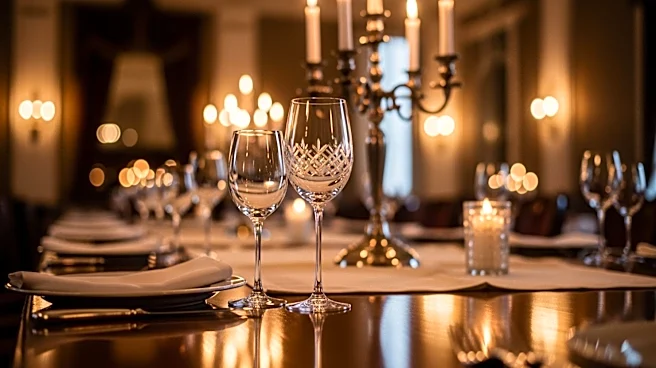


Presidential inaugural balls have been a staple of American political tradition, marking the beginning of a new presidential term. Over the years, these events have experienced significant milestones and turning points that have shaped their evolution. This article highlights some of the key milestones in the history of U.S. presidential inaugural balls.
The Inception of Inaugural Balls
The tradition of inaugural balls began with the first event held on May 7, 1789, in New York City,
following George Washington's inauguration. This inaugural ball set the foundation for future celebrations, establishing a tradition that would continue to evolve over the centuries. The early balls were relatively modest affairs, reflecting the young nation's limited resources and simpler social customs.
In 1809, Dolley Madison hosted a gala at Long's Hotel in Washington D.C. after James Madison's inauguration, selling 400 tickets at $4 each. This event marked the first inaugural ball held in the nation's capital, setting a precedent for future celebrations in Washington D.C. The move to the capital city signified the growing importance of these events in the political and social landscape of the United States.
Expansion and Interruptions
As the nation grew, so did the scale of inaugural balls. By 1833, Andrew Jackson's second inauguration featured two balls, and by 1841, William Henry Harrison's inauguration included three. These expansions reflected the increasing public interest in these events and the desire to accommodate larger crowds.
However, inaugural balls also faced interruptions. Franklin Pierce canceled the ball in 1853 due to personal mourning, and Woodrow Wilson deemed them too extravagant in 1913. Warren G. Harding's decision to cancel the ball in 1921, aiming for simplicity, temporarily ended the tradition. Despite these interruptions, private parties known as "charity balls" continued during this period, especially during the Great Depression and World War II.
Revival and Modernization
The official inaugural balls were revived in 1949 with Harry S. Truman's second inauguration, marking a new era for these events. This revival was followed by a period of growth, with the number of balls increasing significantly. Dwight D. Eisenhower's 1953 inauguration featured two balls, and by 1961, John F. Kennedy's inauguration included five.
In recent years, inaugural balls have continued to evolve, reflecting contemporary cultural trends. The 2009 inauguration of Barack Obama featured a record number of official and unofficial balls, highlighting the event's cultural significance and the public's enthusiasm for political change.
These milestones in the history of inaugural balls demonstrate the dynamic nature of these events and their ability to adapt to changing times. As they continue to evolve, inaugural balls remain a vital part of American political and cultural tradition.