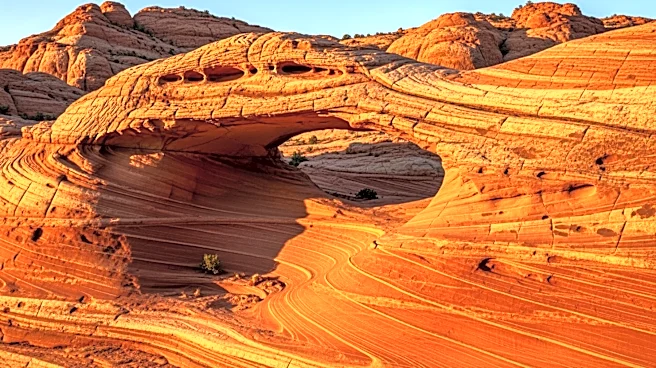








Canyonlands National Park is renowned for its striking geological features, shaped by millions of years of natural processes. The park's landscape is a testament to the power of erosion, with its canyons, mesas, and buttes carved by the Colorado and Green Rivers. This article explores the unique geology of Canyonlands, highlighting the formations and processes that define this remarkable landscape.
Geological Formations and Processes
The geology of Canyonlands National Park is characterized
by a series of sedimentary rock layers, each telling a story of the region's geological history. The park's formations include the White Rim Sandstone, Cedar Mesa Sandstone, and the Organ Rock Shale, among others. These layers were formed over millions of years, as the region experienced changes in climate and sea levels.
Erosion has played a significant role in shaping the park's landscape. The Colorado and Green Rivers have carved deep canyons into the Colorado Plateau, exposing the rock layers and creating the park's dramatic scenery. The process of erosion continues today, slowly altering the landscape and revealing new geological features.
The Role of the Rivers
The Colorado and Green Rivers are central to the geology of Canyonlands National Park. These rivers have carved two large canyons into the plateau, creating the park's distinctive landscape. The confluence of the rivers is a key feature of the park, where the two waterways meet and continue their journey through Cataract Canyon.
The rivers' flow is influenced by snowmelt, rather than management, resulting in varying water levels and conditions. This natural flow contributes to the park's dynamic landscape, with the rivers continuing to shape the canyons and valleys. The unique graben geology of Cataract Canyon, combined with the river's flow, creates some of the largest whitewater rapids in North America during heavy snow years.
Ongoing Geological Research
Canyonlands National Park is a site of ongoing geological research, with scientists studying the park's formations and processes. One area of interest is the Upheaval Dome, a unique geological feature that has sparked debate among geologists. Some believe it was formed by the movement of Paradox salt beds, while others support the theory that it was created by a meteorite impact.
Research in the park also focuses on the effects of climate change on the landscape. The National Park Service is monitoring the impacts of warming temperatures and changing precipitation patterns, which could alter the park's geology over time. This research aims to inform conservation efforts and ensure the preservation of the park's unique geological features for future generations.
Canyonlands National Park's geology is a fascinating subject, offering insights into the natural processes that have shaped the landscape over millions of years. The park's formations and features provide a window into the Earth's history, inviting exploration and discovery.