




Superchargers are fascinating devices that enhance the performance of internal combustion engines by forcing more air into the engine's intake. This increased air allows for more fuel to be burned, resulting in greater power output. While the basic principle of supercharging is straightforward, the mechanics behind it are diverse and complex, with various types of superchargers offering different benefits and challenges.
How Superchargers Work
At its core, a supercharger
is a type of air compressor that increases the pressure or density of air supplied to an internal combustion engine. By compressing the intake air, a supercharger allows the engine to burn more fuel and produce more power than it would with natural aspiration alone. Unlike turbochargers, which are powered by exhaust gases, superchargers are mechanically driven by the engine itself, typically through a belt connected to the crankshaft.
This mechanical connection means that superchargers provide immediate power boosts, as they do not rely on exhaust gas flow to operate. This characteristic makes them particularly valuable in applications where throttle response is critical, such as in drag racing or high-performance sports cars.
Types of Superchargers
There are several types of superchargers, each with its own method of compressing air and unique advantages. The two main families of superchargers are positive displacement and dynamic superchargers.
Positive displacement superchargers, such as the Roots-type and Lysholm screw-type, deliver a nearly constant level of boost pressure across all engine speeds. This consistency makes them ideal for applications requiring steady power delivery. Roots blowers, for example, are known for their simplicity and reliability, although they are less efficient at high boost levels compared to other designs.
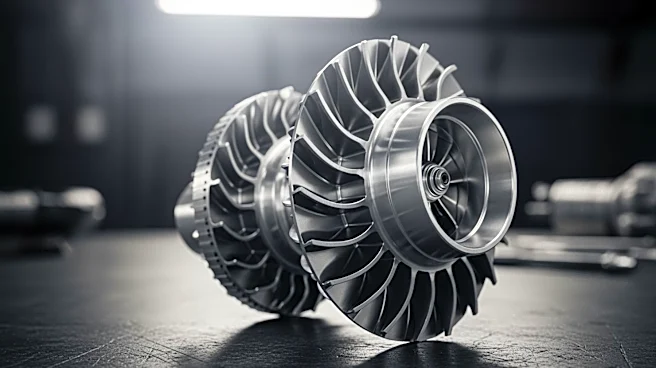
Dynamic superchargers, on the other hand, rely on accelerating air to high speeds and then converting that velocity into pressure. This category includes centrifugal superchargers, which are similar in operation to turbochargers but are mechanically driven. Dynamic superchargers tend to be more efficient at higher engine speeds, making them suitable for high-performance applications.
Innovations and Variants
In addition to traditional mechanical superchargers, the development of electric superchargers has introduced new possibilities. Electric superchargers use an electric motor to drive the compressor, providing a boost without drawing power from the engine. This design offers immediate throttle response and eliminates the lag associated with turbochargers.
Another innovative approach is twincharging, which combines a supercharger and a turbocharger in a single engine. This setup aims to exploit the advantages of both systems, providing low-end torque from the supercharger and high-end power from the turbocharger. While complex, twincharging can offer a seamless power delivery across a wide range of engine speeds.
Overall, the mechanics of superchargers are a testament to the ingenuity and innovation in automotive engineering. By understanding the different types and their applications, one can appreciate the role superchargers play in enhancing engine performance.