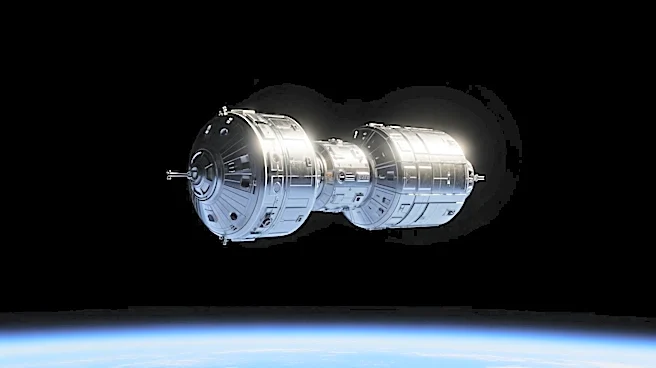





Skylab, the first U.S. space station, was a groundbreaking achievement in space exploration. Launched in 1973, it served as a precursor to future space stations, providing valuable insights and lessons that have shaped the development of subsequent orbital habitats. Skylab's legacy is evident in the design and operation of modern space stations, including the International Space Station (ISS), and continues to influence the future of human space exploration.
Skylab's Contributions to Space Station Design
Skylab was constructed from a repurposed Saturn V third stage, known as the S-IVB, and included a workshop, a solar observatory, and several hundred life science and physical science experiments. This innovative use of existing technology demonstrated the potential for repurposing hardware for new missions, a concept that has been integral to the development of future space stations.
The station's design incorporated features that would become standard in later space habitats, such as modular construction and the use of solar panels for power generation. Skylab's success in providing a habitable environment for extended periods laid the groundwork for the design of more advanced space stations, including the ISS, which continues to build on the principles established by Skylab.
Lessons Learned from Skylab's Challenges
Skylab faced significant challenges during its deployment, including damage sustained during launch that resulted in a power deficit. The successful resolution of these issues through innovative problem-solving and repairs provided valuable lessons in space station maintenance and operations. These experiences have informed the development of protocols and technologies for addressing similar challenges in future missions.
The station's ability to overcome initial setbacks and fulfill its mission objectives highlighted the importance of adaptability and resilience in space exploration. Skylab's legacy in this regard is evident in the ongoing efforts to ensure the safety and reliability of modern space stations, where maintenance and repair are critical components of long-term habitation.
Skylab's Enduring Influence
Skylab's impact on space exploration extends beyond its immediate contributions to science and technology. The station served as a symbol of human ingenuity and the potential for international collaboration in space. Its success paved the way for the development of the ISS, a multinational effort that continues to advance our understanding of space and foster cooperation among nations.
As we look to the future of space exploration, Skylab's legacy remains a guiding force. The lessons learned from its design, operation, and challenges continue to inform the development of new space stations and missions, ensuring that Skylab's influence will be felt for generations to come. Its pioneering spirit and contributions to space science have left an indelible mark on the history of human spaceflight.