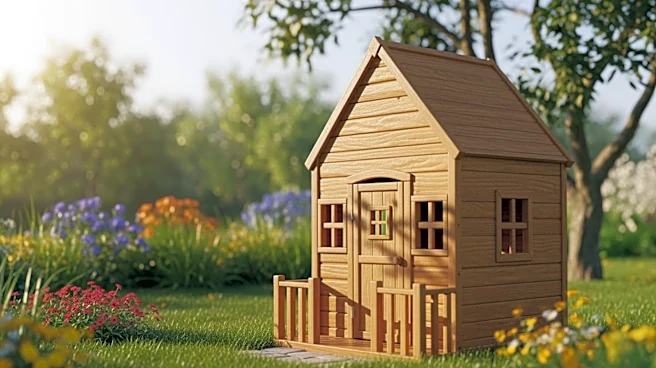






Playhouses are a unique and cherished component of outdoor playsets, offering children a space to engage in imaginative play and creativity. These structures, often resembling scaled-down versions of real homes, provide a setting for children to explore their imaginations and develop social skills.
Design and Features of Playhouses
Playhouses can range from simple cardboard cutouts to elaborate permanent structures equipped with electricity and running water. The design of a playhouse
can significantly influence the type of play that occurs within it. Simple playhouses encourage children to use their imagination to create scenarios and stories, while more complex playhouses offer opportunities for role-playing and social interaction.
The versatility of playhouses allows them to be used in various ways, from hosting tea parties to acting out family scenarios. This flexibility makes playhouses a valuable addition to any outdoor playset, as they cater to a wide range of interests and play styles. The presence of a playhouse in a playground can transform the space into a miniature world where children can explore and express themselves freely.
Impact on Creativity and Imagination
Playhouses play a crucial role in fostering creativity and imagination in children. By providing a dedicated space for imaginative play, playhouses encourage children to think creatively and develop their storytelling abilities. This type of play is essential for cognitive development, as it allows children to experiment with different roles and scenarios.
The enclosed nature of playhouses also provides a sense of ownership and privacy, allowing children to feel safe and secure as they explore their imaginations. This sense of ownership can lead to increased confidence and self-esteem, as children take pride in their ability to create and control their play environment.
Social Interaction and Development
Playhouses are not only a space for individual play but also a setting for social interaction. Children often invite friends to join them in their playhouse, leading to collaborative play and the development of social skills. Through role-playing and shared storytelling, children learn to communicate, negotiate, and cooperate with others.
These interactions are vital for social development, as they teach children how to navigate relationships and work together to achieve common goals. The playhouse becomes a microcosm of the larger social world, providing a safe space for children to practice and refine their social skills.
Playhouses are an integral part of outdoor play, offering children a space to explore their creativity and develop essential social skills. By understanding the role of playhouses, we can appreciate their impact on children's growth and development.