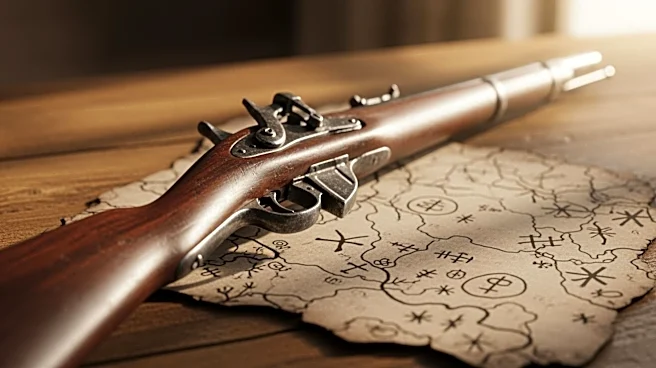

The phrase "Shot heard round the world" is steeped in historical significance, referring to pivotal events that have shaped global history. Originating from Ralph Waldo Emerson's 1837 poem "Concord Hymn,"
the phrase initially described the opening shot of the Battles of Lexington and Concord on April 19, 1775, which marked the beginning of the American Revolutionary War. Over time, this evocative phrase has been applied to other significant events, including the assassination of Archduke Franz Ferdinand in 1914, a catalyst for World War I, and various feats in sports.
The American Revolutionary War
The phrase "Shot heard round the world" first gained prominence through Emerson's "Concord Hymn," which commemorated the skirmish at the Old North Bridge in Concord, Massachusetts. This battle was a crucial early engagement in the American Revolutionary War. Emerson's grandfather and father witnessed the skirmish from the Old Manse, a house located near the bridge. Although there is debate over whether the shots fired at the North Bridge were the first of the Revolution, Emerson's poem immortalized the event as the opening act of the war.
The North Bridge fight was significant for several reasons. It marked the first deliberate volley by Americans acting under orders, resulting in the first British deaths and retreat. The towns of Lexington and Concord have long debated where the first shot was fired, a contention that dates back to at least 1824. Despite the lack of consensus, the phrase has become synonymous with the start of the American fight for independence.
The Assassination of Archduke Franz Ferdinand
Internationally, the phrase "Shot heard round the world" is often associated with the assassination of Archduke Franz Ferdinand in Sarajevo on June 28, 1914. This event is widely considered one of the immediate causes of World War I. Serbian Gavrilo Princip fired two shots, killing both the Archduke and his wife, Sophie. The assassination set off a chain reaction, leading Austria-Hungary and the rest of Europe into a devastating war.
The phrase captures the global impact of the assassination, highlighting how a single act of violence can trigger widespread conflict. It underscores the interconnectedness of nations and the far-reaching consequences of political actions.
Widespread Idiomatic Use
Beyond historical events, the phrase "Shot heard round the world" has been used idiomatically to describe extraordinary moments in sports history. In baseball, it refers to Bobby Thomson's game-winning home run in 1951, which secured the National League pennant for the New York Giants. In soccer, it describes Paul Caligiuri's goal in 1989 that qualified the U.S. team for the 1990 FIFA World Cup.
These uses of the phrase demonstrate its versatility and enduring appeal. Whether applied to historical events or sports achievements, "Shot heard round the world" continues to evoke the idea of a single, decisive moment with global implications.