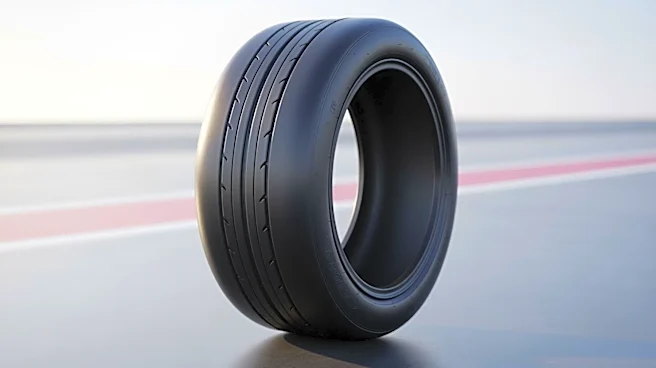







Racing slicks are a staple in modern auto racing, known for their ability to provide maximum traction on dry surfaces. These smooth-tread tires are essential for achieving high speeds and optimal handling on the track. This article explores the current use and performance characteristics of racing slicks in contemporary auto racing.
Performance Characteristics of Racing Slicks
Racing slicks are designed to maximize dry traction by providing the largest possible contact patch with the road. This
is achieved by eliminating grooves in the tread, allowing the tire to maintain a consistent grip on the surface. The performance of slick tires is largely dependent on two stress mechanisms: the indentation of the viscoelastic rubber adapting to the road texture and molecular adhesion at the tire-road interface.
Modern slick tires are constructed from softer compounds that become sticky when heated, enhancing their grip on the road. This stickiness is crucial for maintaining traction during high-speed maneuvers, such as acceleration, braking, and cornering. However, the absence of a tread pattern means that slick tires have reduced traction on wet surfaces, making them unsuitable for use in rainy conditions.
Strategic Use in Racing
In auto racing, the choice of tires is a critical component of race strategy. Racing teams select slick tires for dry conditions to take advantage of their superior traction and handling capabilities. The ability to change tires during a race allows teams to adapt to changing weather conditions, ensuring optimal performance throughout the event.
Slick tires are typically used on race tracks and in road racing, where the demands for acceleration, steering, and braking are high. Their use is limited to dry conditions, as wet roads can lead to aquaplaning, where water trapped between the tire and the road surface reduces traction. In such cases, teams switch to rain tires, which are designed with grooves to channel water away from the contact area.
Limitations and Considerations
While racing slicks offer unparalleled performance on dry surfaces, they come with certain limitations. The soft compounds used in their construction result in lower treadwear ratings, meaning they wear out more quickly than harder rubber tires. This necessitates frequent tire changes during races, adding an element of strategy to tire management.
Additionally, the lack of grooves in slick tires makes them unsuitable for common road vehicles, which must operate in all weather conditions. As a result, racing slicks are reserved for competitive racing environments where their performance advantages can be fully utilized.
In summary, racing slicks play a vital role in modern auto racing, providing the traction and handling needed to achieve high speeds on dry tracks. Their strategic use and performance characteristics make them an indispensable component of competitive racing.