


Apollo 16 marked a significant milestone in the history of space exploration. Launched on April 16, 1972, it was the tenth crewed mission in the Apollo space program and the fifth to land on the Moon. The mission was notable for its scientific objectives, which included extensive exploration of the lunar surface and the collection of valuable geological samples. This article delves into the journey of Apollo 16, from its launch to its successful lunar landing.
Launch and Initial Objectives
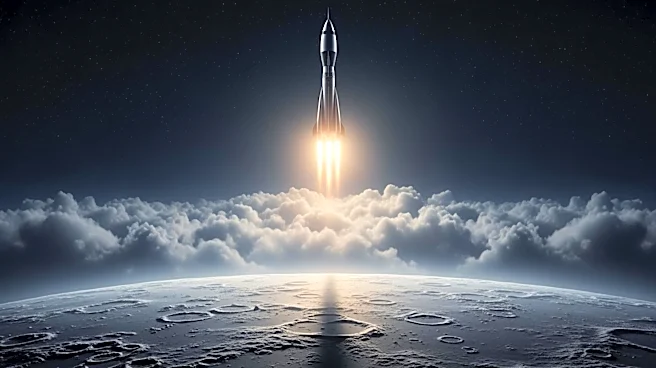
Apollo 16 was launched from Kennedy Space Center in Florida, with a crew consisting of Commander John Young, Command Module Pilot Ken Mattingly, and Lunar Module Pilot Charles Duke. The mission's primary objective was to explore the Descartes Highlands, a region of the Moon that scientists believed could provide insights into the Moon's volcanic history. The launch was smooth, and the spacecraft quickly entered Earth's orbit before setting course for the Moon.
The mission was equipped with a variety of scientific instruments designed to study the lunar surface. These included a magnetometer, a seismometer, and an ultraviolet camera/spectrograph. The crew's task was to deploy these instruments on the lunar surface and conduct experiments that would help scientists understand the Moon's geological history.
The Lunar Landing
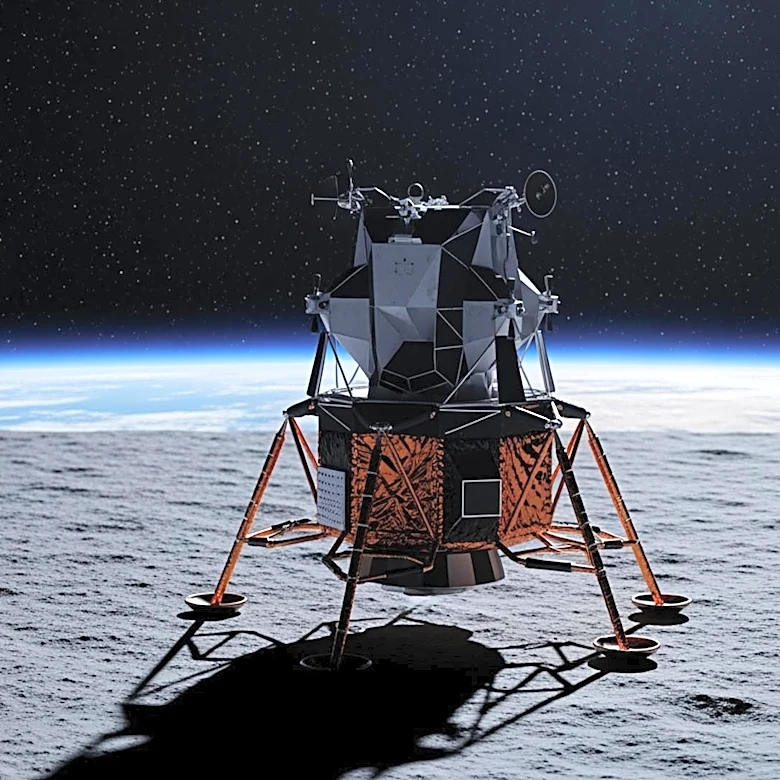
After a three-day journey, Apollo 16 entered lunar orbit. The crew prepared for the descent to the Moon's surface, a critical phase of the mission. The Lunar Module, named Orion, separated from the Command Module and began its descent. The landing site was carefully chosen to maximize scientific return, and the crew was tasked with collecting samples from various geological formations.
The landing was not without its challenges. As the Lunar Module approached the surface, the crew encountered navigation issues that required quick thinking and precise maneuvering. Despite these challenges, Young and Duke successfully landed Orion on the Moon, marking another successful lunar landing for the Apollo program.
Exploration and Scientific Discoveries
Once on the lunar surface, Young and Duke conducted three extravehicular activities (EVAs), spending a total of 20 hours and 14 minutes outside the Lunar Module. They explored the Descartes Highlands, collecting rock and soil samples that would later provide valuable insights into the Moon's history. The crew also deployed scientific instruments that continued to send data back to Earth long after the mission ended.
One of the mission's highlights was the use of the Lunar Roving Vehicle, which allowed the astronauts to travel further from the landing site than on previous missions. This increased mobility enabled them to collect a wider variety of samples and conduct more extensive scientific experiments.
Apollo 16's successful mission added to the wealth of knowledge about the Moon and demonstrated the capabilities of human space exploration. The mission's achievements continue to influence lunar science and exploration efforts today.