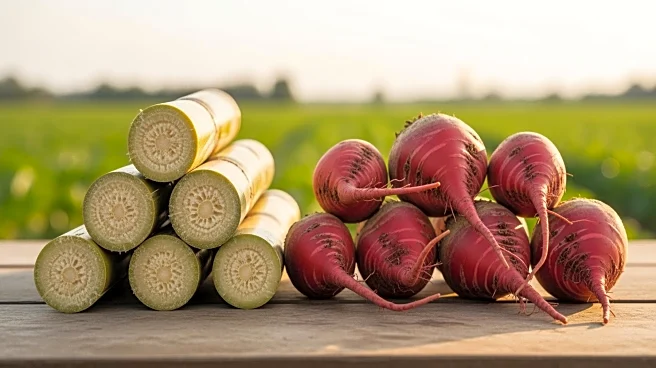



Sugarcane and sugar beets are two of the most important crops in the United States, playing a vital role in the country's agricultural landscape. These crops are not only significant for sugar production but also contribute to the economy and employment in various regions. This article explores the role of sugarcane and sugar beets in U.S. agriculture.
Sugarcane Production
Sugarcane is primarily grown in Florida, Louisiana, and Texas, with Florida being the largest cane-producing
region in the United States. The state's production expanded significantly after the U.S. ceased importing sugar from Cuba in 1960. Most of Florida's sugarcane is produced in organic soils along the southern and southeastern shore of Lake Okeechobee, where the growing season is long and winters are generally warm.
Louisiana, the northernmost cane-growing state, has seen its sugarcane production largely confined to the Mississippi River Delta. However, the industry has expanded into nontraditional areas due to decreased returns for competing crops like rice and soybeans. The adoption of high-yielding sugarcane varieties and investments in new harvesting combines have further boosted production.
Sugar Beet Cultivation
Sugar beets are the other leading raw material for sugar production in the United States. This sturdy crop is grown in a wide variety of temperate climatic conditions and is planted annually. Sugar beets can be stored for a short while after harvest but must be processed before sucrose deterioration occurs.
Sugar beet production occurs in five regions encompassing eleven states, with the Red River Valley of western Minnesota and eastern North Dakota being the largest. The introduction of genetically modified seed varieties has significantly increased yields, with 95% of sugar beet planted areas using these varieties by 2009/10.
Economic and Environmental Impact
The sugar industry contributes significantly to the economy, providing jobs and supporting local communities. In Florida, Louisiana, and Texas, sugarcane production is a major economic driver, while sugar beet cultivation supports agriculture in the Great Plains and Far West regions.
Environmental considerations are also important in sugar production. The use of irrigation and investment in covered and ventilated storage facilities have improved processing efficiency and quality. However, challenges such as water scarcity and climate change continue to impact production, requiring ongoing adaptation and innovation.
Overall, sugarcane and sugar beets are integral to U.S. agriculture, providing economic benefits and supporting rural communities while facing environmental challenges.