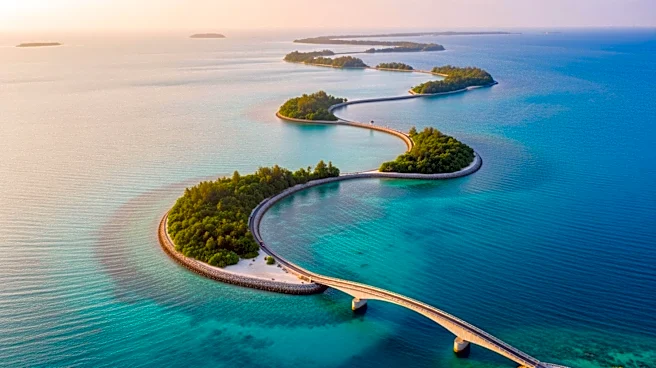









The Florida Keys, a picturesque chain of islands off the southern coast of Florida, have a rich and varied history that has shaped their development over the centuries. From their early days as a haven for indigenous peoples to their transformation into a bustling tourist destination, the history of the Florida Keys is a testament to the resilience and adaptability of this unique region.
Early Inhabitants and European Exploration
The Florida Keys were originally inhabited by the Calusa and
Tequesta peoples, who thrived in the region long before European explorers arrived. These indigenous groups utilized the abundant marine resources and established a way of life that was closely tied to the sea. The first European to chart the Florida Keys was Juan Ponce de León in 1513, who named the islands Los Martires, or "The Martyrs," due to their jagged appearance from a distance.
The Spanish word "cayo," meaning small island, eventually evolved into the English word "key," which is now used to describe the islands. For many years, the Florida Keys remained relatively isolated, with only occasional visits from fishermen and traders. However, the strategic location of the Keys made them an attractive target for European powers, leading to a series of ownership claims and disputes over the centuries.
The Rise of Key West
In the 19th century, Key West emerged as a major center of commerce and trade. Its deep harbor and strategic location made it an ideal hub for shipping routes between New Orleans, Cuba, and the Bahamas. Key West quickly became the largest town in Florida, thriving on revenues from wrecking, a practice that involved salvaging goods from shipwrecks in the treacherous waters surrounding the Keys.
The prosperity of Key West attracted a diverse population, including many Cuban immigrants who established cigar factories and contributed to the city's cultural vibrancy. However, as navigation improved and shipwrecks became less frequent, Key West's economy began to decline in the late 19th century. Despite this downturn, the city remained an important military outpost, particularly during the American Civil War, when it served as a Union stronghold.
The Overseas Railway and Highway
The early 20th century brought significant changes to the Florida Keys with the construction of Henry Flagler's Overseas Railway. Completed in the early 1910s, this ambitious project connected the Keys to the mainland, facilitating travel and commerce. However, the railway was severely damaged by the Labor Day Hurricane of 1935, one of the most powerful storms to ever strike the United States.
In the aftermath of the hurricane, the railway was abandoned, and the Overseas Highway was constructed in its place. This highway, which runs from Key Largo to Key West, opened the Keys to automobile travel and tourism, transforming the region into a popular vacation destination. Today, the Florida Keys continue to attract visitors from around the world, drawn by their natural beauty, rich history, and vibrant culture.
The historical development of the Florida Keys is a story of adaptation and resilience, as the islands have evolved from a remote outpost to a thriving tourist destination. The legacy of the early inhabitants, European explorers, and enterprising settlers is still evident in the unique character and charm of the Florida Keys.