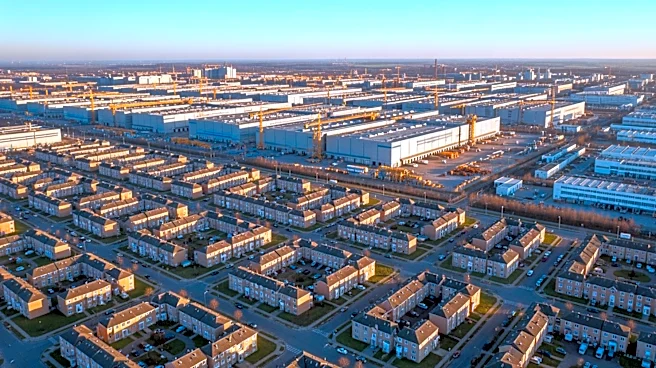







The Tennessee Valley Authority (TVA) was established in 1933 as part of President Franklin D. Roosevelt's New Deal, aiming to revitalize the Tennessee Valley region during the Great Depression. This federally-owned corporation was tasked with addressing economic and social challenges in an area that was suffering from severe poverty and lack of infrastructure. The TVA's creation marked a significant shift in how the government approached regional
development, setting a precedent for future initiatives.
The Need for Economic Development
In the early 20th century, the Tennessee Valley was in dire economic straits, exacerbated by the Great Depression. The region's per capita income was less than half the national average, and unemployment was rampant. The land was exhausted from poor farming practices, and the soil was eroded and depleted, leading to reduced crop yields and diminished farm incomes. The TVA was conceived as a solution to these problems, aiming to modernize the region's economy and society through a comprehensive approach that included flood control, electricity generation, and agricultural development.
The TVA's initial focus was on harnessing the power of the Tennessee River to provide electricity and improve navigation. By constructing dams, the TVA sought to control flooding, which had long plagued the region, and create a reliable source of hydroelectric power. This infrastructure was intended to attract new industries to the area, providing much-needed jobs and stimulating economic growth.
Early Projects and Challenges
One of the TVA's first major projects was the construction of Norris Dam, which began in 1933. This dam was designed to provide flood control and hydroelectric power, serving as a model for subsequent projects. The construction of Norris Dam required the relocation of thousands of families and the inundation of several communities, which led to some opposition from local residents. Despite these challenges, the dam was completed in 1936 and became a symbol of the TVA's mission to transform the region.
The TVA's efforts were not without controversy. The use of eminent domain to acquire land for dam construction displaced many residents, and the agency faced criticism for its impact on local communities. However, the TVA's projects ultimately provided significant benefits, including improved agricultural practices, reforestation, and enhanced habitats for fish and wildlife.
Legacy and Impact
The TVA's early initiatives laid the groundwork for the agency's long-term success in modernizing the Tennessee Valley. By providing electricity to rural areas, the TVA helped improve the quality of life for many residents and attracted new industries to the region. The agency's work in flood control and land management also contributed to the area's economic development, making the Tennessee Valley a more viable place for agriculture and industry.
Today, the TVA is recognized as a pioneering effort in regional planning and development, serving as a model for similar initiatives worldwide. Its founding and early history demonstrate the potential for government-led projects to drive economic growth and improve living conditions in underserved areas.