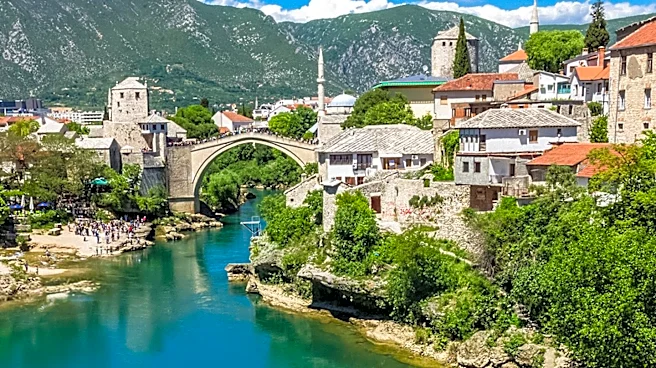








The Balkans, a region in southeastern Europe, have been a crossroads of cultures and civilizations for centuries. This area, named after the Balkan Mountains, has played a pivotal role in European history, serving as a bridge between East and West. From ancient times to the modern era, the Balkans have been a stage for significant historical events that have shaped the course of European development.
Ancient and Medieval Times
The history of the Balkans dates back to ancient
times when it was inhabited by Thracian, Illyrian, and Dacian tribes. These groups were later influenced by the Greeks and Romans, who established colonies and spread their culture throughout the region. The Roman Empire's presence in the Balkans left a lasting legacy, with many Roman roads, cities, and fortifications still visible today.
During the Middle Ages, the Balkans became a battleground for various empires, including the Byzantine Empire, the Bulgarian Empire, and the Serbian Empire. The region's strategic location made it a target for conquest and control, leading to a rich tapestry of cultural and religious influences. The spread of Christianity in the Balkans during this period laid the foundation for the region's religious diversity, which includes Eastern Orthodox, Catholic, and Islamic traditions.
Ottoman Era and Nationalism
The Ottoman Empire's expansion into the Balkans in the 14th century marked a significant turning point in the region's history. The Ottomans ruled the Balkans for several centuries, introducing Islamic culture and governance. This period saw the rise of a unique blend of Eastern and Western influences, as the Ottomans integrated the Balkans into their vast empire.
The decline of the Ottoman Empire in the 19th century sparked a wave of nationalism across the Balkans. Various ethnic groups sought independence and self-determination, leading to a series of uprisings and conflicts. The Balkan Wars of the early 20th century further reshaped the region's political landscape, as new nation-states emerged from the remnants of the Ottoman Empire.
The Balkans in the 20th Century
The Balkans continued to play a crucial role in European history throughout the 20th century. The assassination of Archduke Franz Ferdinand in Sarajevo in 1914 triggered the outbreak of World War I, highlighting the region's geopolitical significance. After the war, the Balkans underwent significant political changes, with the formation of new states and shifting alliances.
During the Cold War, the Balkans were divided between the Eastern and Western blocs, with countries like Yugoslavia pursuing a non-aligned path. The breakup of Yugoslavia in the 1990s led to a series of conflicts and humanitarian crises, drawing international attention to the region once again.
In summary, the Balkans have been a focal point of European history, influencing the continent's cultural, political, and social development. The region's complex history and diverse cultural heritage continue to shape its role in Europe today.