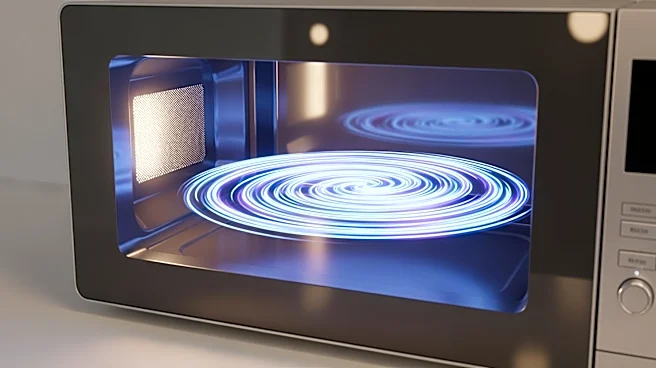

Microwave ovens have become a ubiquitous part of modern kitchens, known for their ability to quickly heat and cook food. But how exactly do they work? The science behind microwave cooking involves the use
of electromagnetic radiation to generate heat within food. This article delves into the principles of microwave cooking and how this technology efficiently heats food.
Dielectric Heating Explained
At the core of microwave cooking is a process known as dielectric heating. Microwave ovens emit electromagnetic radiation in the microwave frequency range, typically around 2.45 GHz. This radiation is absorbed by water molecules and other polar molecules in the food. As these molecules absorb the microwaves, they begin to rotate rapidly, creating friction and generating heat.
This process is highly efficient because it directly heats the water molecules within the food, rather than heating the air or the container. As a result, microwave ovens can heat food much faster than conventional ovens, which rely on conduction and convection to transfer heat from the outside in.
Uniform Heating Challenges
While microwave ovens are efficient, they do face challenges in achieving uniform heating. The microwaves penetrate food to a depth of about 1 to 1.5 inches, which can lead to uneven heating, especially in thicker items. To address this, many microwave ovens are equipped with turntables or mode stirrers that help distribute the microwaves more evenly throughout the cooking chamber.
Additionally, the design of the microwave oven's cavity and the use of a waveguide help direct the microwaves to ensure more consistent heating. Despite these measures, some foods may still require stirring or repositioning during cooking to achieve even results.
Safety and Efficiency
Microwave ovens are designed to be safe and efficient. The cooking chamber acts as a Faraday cage, preventing microwaves from escaping and ensuring they are contained within the oven. This design, along with safety interlocks on the door, minimizes the risk of exposure to microwave radiation.
In terms of energy efficiency, microwave ovens convert a significant portion of electrical energy into microwaves, making them more efficient than many traditional cooking methods. This efficiency, combined with their speed, makes microwave ovens a popular choice for quick meal preparation.
Understanding the science behind microwave cooking reveals the innovative use of electromagnetic radiation to transform how we prepare food. This technology continues to evolve, offering new features and capabilities that enhance its convenience and versatility in the kitchen.