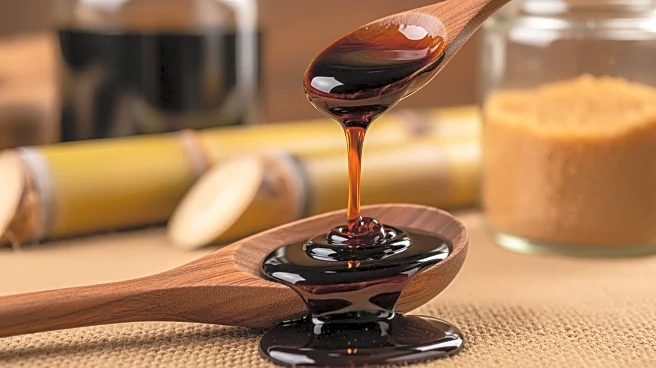

Molasses has a storied past, particularly in the Americas, where it was once a staple sweetener. This thick, dark syrup, derived from sugarcane or sugar beet juice, has been used for centuries in various
culinary and industrial applications. Its history is as rich as its flavor, making it a fascinating subject for exploration.
The Golden Age of Sugar Production
The history of molasses is closely tied to the sugar industry. During the golden age of sugar production, molasses was a byproduct of refining sugarcane into sugar. It became a popular sweetener in the Americas before the 20th century, when it was more readily available than refined sugar.
In colonial times, molasses was used not only as a sweetener but also as an ingredient in brewing beer. It was a key component in recipes, including those found in George Washington's notebook, which contained a molasses beer recipe. This highlights the versatility and importance of molasses in early American culinary practices.
Molasses in Traditional Cuisine
Molasses has maintained its place in traditional cuisine, particularly in regions like Madeira Island. Known as mel-de-cana, or sugarcane honey, molasses is an integral part of the island's culinary heritage. Its use dates back to the height of sugar production in the archipelago, showcasing its long-standing cultural significance.
The robust flavor of molasses makes it a favored ingredient in various traditional dishes. Its ability to enhance the taste of foods while providing nutritional benefits has ensured its continued use in regional cuisines. This enduring popularity speaks to the unique qualities of molasses as both a flavoring agent and a source of nutrients.
Industrial and Modern Uses
Beyond its culinary applications, molasses has found a place in industrial processes. It is used in the distillation of rum, as an additive in mortar, and as a soil amendment to promote microbial activity. These diverse uses demonstrate the versatility of molasses beyond the kitchen.
In modern times, molasses continues to be valued for its nutritional content, including vitamin B6 and essential minerals. Its role as a natural sweetener with health benefits has contributed to its resurgence in popularity among health-conscious consumers. As more people seek alternatives to refined sugars, molasses offers a flavorful and nutritious option.
In summary, molasses is more than just a sweetener; it is a product with a rich history and diverse applications. From its role in early American cuisine to its modern uses, molasses remains a valuable and versatile ingredient.