


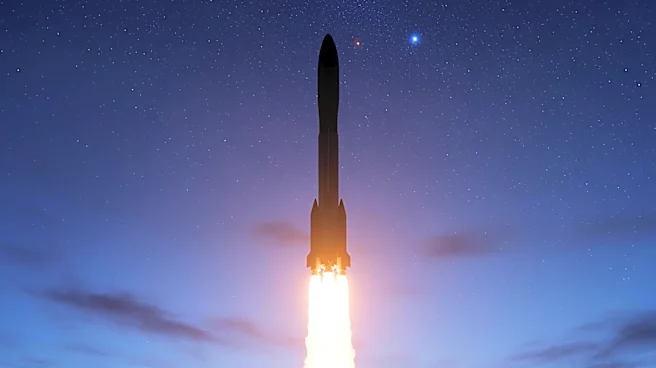
On May 5, 1961, the United States marked a significant milestone in space exploration with the launch of Mercury-Redstone 3, also known as Freedom 7. Piloted by astronaut Alan Shepard, this mission was the first U.S. human spaceflight and a pivotal moment in the space race. The mission's success demonstrated the capability of the United States to send a human into space and safely return them to Earth, setting the stage for future orbital missions.
The Mission's Objectives and Achievements
Mercury-Redstone 3 was part of Project Mercury, which aimed to put an astronaut into orbit and return them safely. Although Shepard's mission was a suborbital flight, it was crucial in demonstrating that a human could withstand the high g-forces of launch and re-entry. The spacecraft, named Freedom 7 by Shepard, reached an altitude of 101.2 nautical miles and traveled a downrange distance of 263.1 nautical miles. During the 15-minute flight, Shepard tested the capsule's attitude control system and observed the Earth from space.
The mission was a technical success, showcasing the effectiveness of the Mercury-Redstone Launch Vehicle. Despite the mission's success, American pride was somewhat overshadowed by the Soviet Union's earlier achievement of sending Yuri Gagarin into orbit. Nevertheless, Mercury-Redstone 3 was a critical step in the U.S. space program, proving that the nation was capable of human spaceflight.
Preparations and Challenges
The preparation for Mercury-Redstone 3 was extensive. The spacecraft, Mercury capsule #7, required significant development and testing before it was deemed safe for flight. Concerns about the safety of the Redstone launch vehicle, especially after technical issues during the MR-2 test flight, led to additional testing and modifications. These included the MR-BD test flight, which ensured the booster was ready for the crewed mission.
Alan Shepard was selected as the primary pilot for the mission, with John Glenn and Gus Grissom as backups. The selection process was kept confidential until the initial launch attempt was canceled due to weather conditions. Shepard's name was only publicly announced after the mission was rescheduled, highlighting the careful planning and consideration involved in the mission.
The Legacy of Mercury-Redstone 3
Mercury-Redstone 3 set a precedent for future space missions. Shepard's naming of the spacecraft as Freedom 7 established a tradition for the Mercury astronauts to name their capsules, with each name ending in "7" to honor the original group of seven astronauts. The mission also led to improvements in space suit design, as Shepard's experience highlighted the need for a liquid waste collection device.
The success of Mercury-Redstone 3 paved the way for subsequent missions, including the first U.S. orbital flight. It remains a symbol of American ingenuity and determination in the early days of space exploration. Today, Freedom 7 is displayed at the Smithsonian's National Air and Space Museum, serving as a reminder of this historic achievement.