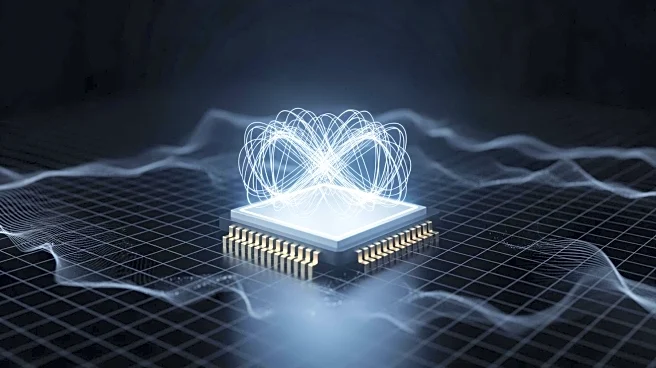




Quantum computing is a revolutionary field that leverages the principles of quantum mechanics to perform computations. Unlike classical computers, which use bits as the smallest unit of data, quantum computers use qubits. These qubits can exist in multiple states simultaneously, thanks to the phenomena of superposition and entanglement. This unique capability allows quantum computers to process complex calculations at speeds unattainable by classical computers.
While practical quantum computing is still in its infancy, its potential applications are vast and transformative.
Theoretical Foundations and Early Developments
Quantum computing is rooted in the principles of quantum mechanics, a branch of physics that describes the behavior of matter and energy at the smallest scales. The concept of quantum computing was first proposed in the 1980s, with the idea that quantum systems could be used to perform computations more efficiently than classical systems. The theoretical framework for quantum computing was further developed in the following decades, leading to the creation of quantum algorithms that could solve specific problems faster than their classical counterparts.
One of the most significant early developments in quantum computing was the introduction of Shor's algorithm, which demonstrated that a quantum computer could factor large integers exponentially faster than the best-known classical algorithms. This breakthrough highlighted the potential of quantum computing to revolutionize fields such as cryptography, where the security of many systems relies on the difficulty of factoring large numbers.
Challenges in Building Practical Quantum Computers
Despite the promising theoretical foundations, building practical quantum computers presents significant challenges. One of the primary obstacles is maintaining the delicate quantum states of qubits, which are highly susceptible to environmental disturbances. This sensitivity leads to errors in computations, necessitating the development of error correction techniques to ensure reliable results.
Another challenge is scaling up quantum systems to include a large number of qubits. Current quantum computers are limited in size and capability, with most systems containing fewer than 100 qubits. Achieving the full potential of quantum computing will require advances in qubit technology, control systems, and error correction methods to build larger, more robust quantum processors.
Potential Applications and Future Prospects
Quantum computing holds the promise of transforming various industries by solving problems that are currently intractable for classical computers. Potential applications include cryptography, where quantum algorithms could break existing encryption methods, and optimization, where quantum computers could find optimal solutions to complex problems in logistics, finance, and materials science.
In the field of drug discovery, quantum computing could accelerate the identification of new compounds by simulating molecular interactions at an unprecedented scale. Additionally, quantum computers could enhance machine learning algorithms, leading to more efficient data analysis and pattern recognition.
While practical quantum applications are expected to emerge around 2035-2040, ongoing research and development continue to push the boundaries of what is possible. As quantum technology advances, it holds the potential to revolutionize computing and unlock new possibilities across various fields.