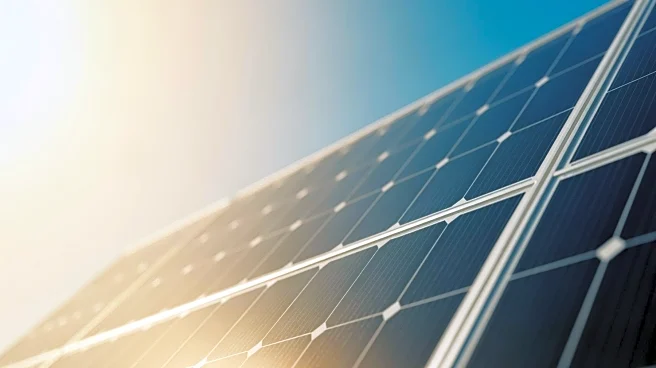




Solar power in the United States has seen remarkable growth over the past few decades. With over 100 gigawatts (GW) of installed capacity by 2021, the U.S. has become a leader in both utility-scale solar projects and rooftop installations. This expansion has been driven by declining costs and supportive policies, making solar energy a significant contributor to the nation's electricity supply.
Expansion of Solar Installations
The rapid increase in solar installations across the United
States can be attributed to several factors. As of the end of 2019, the U.S. had 76 GW of installed solar photovoltaic (PV) capacity, placing it among the top four countries globally for solar PV installations. This growth has been fueled by a combination of decreasing costs for solar technology and favorable government policies. The American Solar Energy Industries Association projected that total solar PV capacity would surpass 100 GW by 2021, highlighting the sector's momentum.
Utility-scale solar power plants have played a crucial role in this expansion. The U.S. is home to four of the ten largest utility-scale photovoltaic power stations in the world as of 2017. These large-scale projects have significantly contributed to the overall capacity, providing a substantial portion of the nation's solar-generated electricity.
Policy Support and State Initiatives
Government policies have been instrumental in promoting solar power in the United States. As of October 2015, 29 states had set mandatory renewable energy targets, with solar power specifically included in 20 of them. These policies have encouraged the development of both utility-scale projects and distributed generation, such as rooftop solar systems.
The federal government has also supported solar energy through tax incentives and research funding. These measures have helped reduce the cost of solar installations, making them more accessible to homeowners and businesses. As a result, approximately 784,000 homes and businesses had installed solar systems by the second quarter of 2015.
Impact on Electricity Generation
The growth of solar power has had a significant impact on electricity generation in the United States. According to the U.S. Energy Information Administration, utility-scale solar power generated 1.8% of total U.S. electricity in 2019, up from less than 0.1% in 2005. This figure is even higher in certain states, with solar power accounting for over 10% of electricity generation in California, Hawaii, Nevada, Massachusetts, and Vermont.
The increasing share of solar energy in the electricity mix has contributed to a more diverse and sustainable energy portfolio. As solar technology continues to advance and costs decline further, the role of solar power in the U.S. energy landscape is expected to grow, supporting the transition to a cleaner and more resilient energy system.