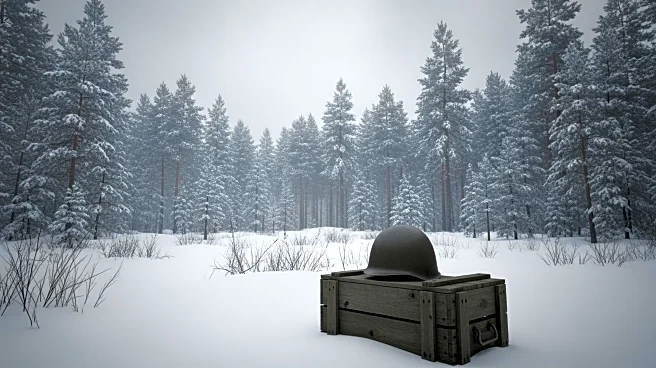




The Siege of Bastogne was a critical moment in World War II, marking a turning point in the Battle of the Bulge. This siege, which took place from December 1944 to January 1945, saw German forces surrounding the town of Bastogne in Belgium, aiming to capture it as part of their larger offensive. The siege was eventually broken by the arrival of General George S. Patton's Third Army, leading to a significant Allied victory.
The German Offensive
The Battle of the Bulge began
on December 16, 1944, when German forces launched a surprise attack through the Ardennes region. Their goal was to split the Allied forces and capture the strategic port of Antwerp. Bastogne, a small town in Belgium, became a focal point due to its location at the crossroads of several important roads. The Germans surrounded Bastogne, cutting off the American forces stationed there.
The German strategy relied on speed and surprise, hoping to capture Bastogne quickly and use it as a base to advance further. However, the American forces, including the 101st Airborne Division, were determined to hold their ground. Despite being outnumbered and facing harsh winter conditions, the American troops managed to repel several German attacks, maintaining control of the town.
The Role of the 101st Airborne Division
The 101st Airborne Division played a crucial role in the defense of Bastogne. Under the command of Brigadier General Anthony McAuliffe, the division was tasked with holding the town against the German onslaught. Despite being surrounded and facing shortages of food, ammunition, and medical supplies, the division held firm.
On December 22, German emissaries approached McAuliffe, demanding the surrender of the American forces. McAuliffe famously replied with a single word: "Nuts!" This defiant response became a symbol of American resilience and determination. The 101st Airborne Division continued to hold Bastogne until reinforcements arrived.
Patton's Relief and the Aftermath
The siege of Bastogne was finally broken on December 26, 1944, when General Patton's Third Army arrived to relieve the besieged town. Patton's forces fought through difficult conditions to reach Bastogne, providing much-needed support to the defenders. The arrival of the Third Army marked a turning point in the Battle of the Bulge, as the German offensive began to falter.
The successful defense of Bastogne and the subsequent relief by Patton's forces were pivotal in the Allied victory in the Battle of the Bulge. The siege demonstrated the importance of strategic locations and the resilience of the American forces. It also highlighted the effectiveness of Allied coordination and the ability to adapt to changing circumstances on the battlefield.