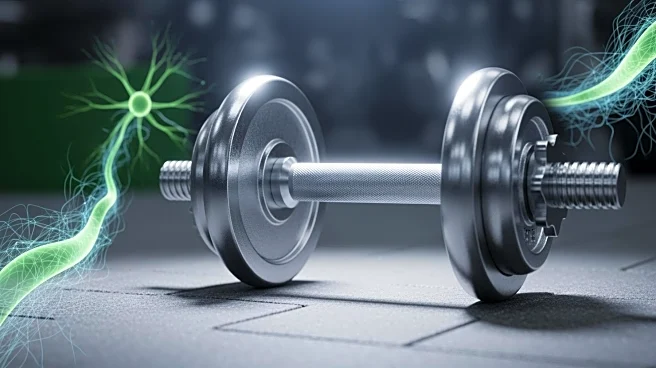




Muscle memory is a fascinating concept often discussed in the context of strength training. It refers to the body's ability to quickly regain muscle mass and strength after a period of inactivity. This phenomenon is particularly intriguing because it suggests that muscles have a form of memory that allows them to return to a previously trained state more rapidly than if they were starting from scratch. Understanding muscle memory can have significant
implications for athletes, fitness enthusiasts, and even those recovering from injuries.
The Mechanisms of Muscle Memory
Muscle memory in strength training is primarily associated with the muscle fibers themselves rather than the central nervous system. When individuals engage in strength training, their muscle fibers undergo structural changes, increasing in size and strength. This process involves the addition of new cell nuclei to the muscle fibers, which are essential for supporting the increased cellular volume. These nuclei are not lost during periods of inactivity, which means that when training resumes, the muscle fibers can quickly rebuild and regain strength.
The concept of muscle memory challenges the traditional view that muscle fibers revert to their original state after a period of detraining. Instead, research has shown that the structural changes in muscle fibers can be long-lasting, if not permanent. This means that once a person has trained their muscles to a certain level, they can return to that level more quickly after a break, thanks to the retained cell nuclei.
Implications for Training and Health
The understanding of muscle memory has important implications for exercise and health. For athletes, it means that taking a break from training does not necessarily mean starting from scratch when they return. The retained muscle nuclei allow for a quicker return to peak performance. This knowledge can also influence how athletes plan their training cycles, allowing for strategic rest periods without the fear of losing all their progress.
For the general population, muscle memory can be a motivating factor in maintaining an active lifestyle. Knowing that the body retains some benefits of past training can encourage individuals to resume exercise after a hiatus. Additionally, for older adults, engaging in strength training earlier in life can be beneficial, as the ability to recruit new muscle nuclei diminishes with age.
The Role of Anabolic Steroids and Epigenetics
Anabolic steroids are known to enhance muscle growth by recruiting new muscle nuclei. Interestingly, even after the cessation of steroid use, the additional nuclei remain, suggesting long-lasting effects on muscle growth potential. This has implications for sports and doping regulations, as the benefits of steroid use may persist long after the drugs are no longer detectable.
Recent research has also pointed to epigenetics as a mechanism for muscle memory. Changes in DNA methylation patterns may help muscles remember previous training, allowing for enhanced adaptation upon retraining. This area of study is still developing, but it holds promise for understanding how muscles adapt and retain training benefits over time.