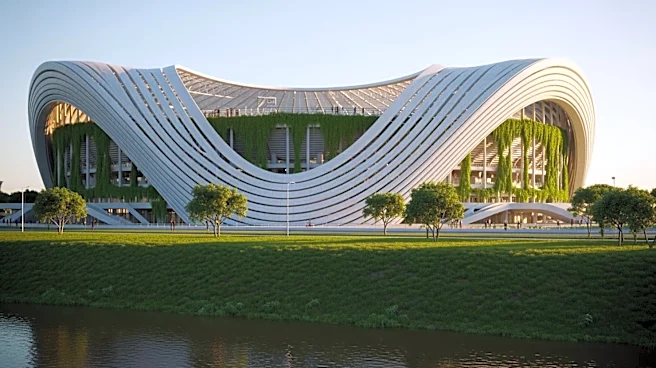








The city of Manaus in Brazil underwent a significant transformation with the demolition of the Vivaldão stadium and the construction of the Arena da Amazônia. This change was part of a broader initiative to prepare the city for the 2014 FIFA World Cup. The new stadium not only replaced an iconic structure but also aimed to enhance the city's infrastructure and global appeal.
The Legacy of Vivaldão
Vivaldão, officially known as Estádio Vivaldo Lima, was a multi-purpose stadium
in Manaus, primarily used for football matches. It was completed in 1970 and had a seating capacity of 36,000. The stadium was named after Vivaldo Lima, a significant figure in local football, and served as the home ground for several local clubs, including América Futebol Clube, Nacional Futebol Clube, and Atlético Rio Negro Clube.
The stadium's most notable event was a record attendance of 56,950 spectators in 1980 during a match between Fast Clube and New York Cosmos. This event highlighted the stadium's importance in the local sports scene. However, as the years passed, the need for a modern facility became apparent, especially with the upcoming 2014 FIFA World Cup.
The Birth of Arena da Amazônia
In 2009, Manaus was selected as one of the host cities for the 2014 FIFA World Cup. This selection prompted the decision to demolish Vivaldão and construct a new stadium, the Arena da Amazônia, in its place. The new stadium was designed to accommodate 41,000 spectators and included additional facilities such as sports and recreation areas and a shopping mall.
The demolition of Vivaldão began in 2010, marking the end of an era for the city. The construction of the Arena da Amazônia was a significant investment, with approximately R$580,000,000 allocated to the project. This investment was not only in the stadium itself but also in the surrounding infrastructure, aiming to boost the city's economy and tourism.
Impact on Manaus
The transition from Vivaldão to Arena da Amazônia had a profound impact on Manaus. The new stadium hosted four matches during the 2014 FIFA World Cup, bringing international attention to the city. This exposure was expected to enhance tourism and provide long-term economic benefits.
Moreover, the Arena da Amazônia became a symbol of modernity and progress for Manaus. It represented the city's ability to host international events and its commitment to developing its infrastructure. The stadium continues to serve as a venue for various events, contributing to the local community and economy.
In conclusion, the transformation from Vivaldão to Arena da Amazônia was a pivotal moment for Manaus. It marked the city's evolution and its readiness to embrace the future while honoring its past.