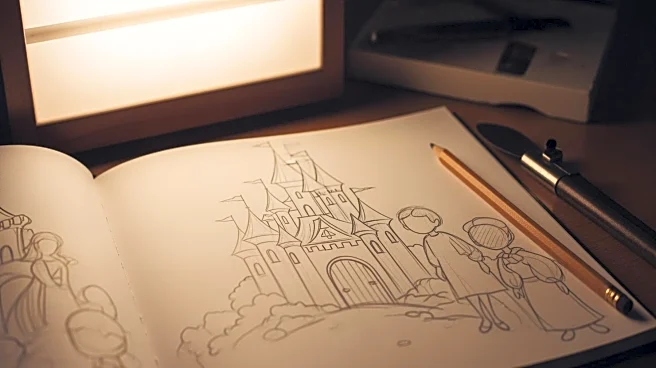

Sleeping Beauty, released in 1959, stands as one of Disney's most ambitious animated films. The production of this classic fairy tale adaptation was a monumental task that spanned nearly a decade. This article delves into the intricate process of bringing Sleeping Beauty to life, highlighting the challenges and innovations that defined its creation.
A Long Journey from Concept to Screen
The journey to create Sleeping Beauty began in 1950, when Walt Disney decided to adapt Charles Perrault's
fairy tale. The project was envisioned as the pinnacle of Disney's animation achievements, and no expense was spared in its production. However, the film's development was fraught with challenges, including a lengthy production timeline and escalating costs. Initially slated for a 1955 release, the film faced multiple delays, eventually premiering in 1959.
One of the primary reasons for the extended timeline was Disney's desire for a unique visual style. Eyvind Earle, the film's production designer, was tasked with creating a tapestry-like art style inspired by pre-Renaissance European art. This decision required animators to adapt to a new aesthetic, which proved to be a time-consuming process. The film's production was further complicated by Disney's focus on other projects, such as the development of Disneyland, which diverted resources and attention away from Sleeping Beauty.
Innovations in Animation and Technology
Despite the challenges, Sleeping Beauty was a groundbreaking film in terms of animation and technology. It was the first animated film to use the Super Technirama 70 widescreen process, providing a more immersive viewing experience. This innovation required animators to work with larger sheets of paper and create more detailed artwork to fill the expanded frame.
The film's score, composed by George Bruns, was based on Pyotr Tchaikovsky's 1889 ballet, adding a classical touch to the film's musical landscape. The combination of Earle's unique visual style and Bruns' adaptation of Tchaikovsky's music resulted in a film that was both visually and aurally distinct from previous Disney productions.
The Legacy of Sleeping Beauty
Upon its release, Sleeping Beauty received mixed reviews, with critics praising its art direction and musical score but criticizing its plot and characters. Despite its initial box-office failure, the film has since become one of Disney's most artistically acclaimed features. Its re-releases have been successful, and it was selected for preservation in the United States Library of Congress' National Film Registry in 2019.
The legacy of Sleeping Beauty extends beyond its artistic achievements. The film's production process set new standards for animation and inspired future Disney projects. Its influence can be seen in later films such as Pocahontas and Frozen, which drew inspiration from Earle's stylized backgrounds and bold color choices. Today, Sleeping Beauty remains a testament to the dedication and innovation of Disney's animators, who overcame numerous challenges to create a timeless classic.