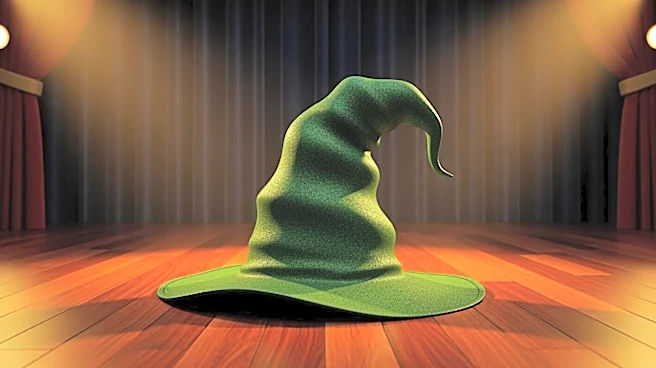








The Broadway musical Wicked, which has captivated audiences since its debut in 2003, is the result of a remarkable creative journey. Based on Gregory Maguire's 1995 novel, Wicked: The Life and Times of the Wicked Witch of the West, the musical was brought to life by composer and lyricist Stephen Schwartz and writer Winnie Holzman. This article delves into the development and creative process that led to the creation of this iconic production.
From Novel to Stage
The journey
of Wicked began when Stephen Schwartz discovered Gregory Maguire's novel while on vacation. Intrigued by its potential for a dramatic adaptation, Schwartz was determined to bring the story to the stage. However, the rights to the novel had already been acquired by Universal Pictures for a potential film adaptation. Undeterred, Schwartz made an impassioned plea to Universal producer Marc Platt, who eventually agreed to release the rights for a stage production.
Schwartz collaborated with writer Winnie Holzman to condense the novel's complex plot into a coherent script. The duo focused on the relationship between the two main characters, Elphaba and Glinda, and how their friendship evolves amidst the political and social turmoil in the Land of Oz. The creative team worked tirelessly to develop an original stage piece that captured the essence of Maguire's novel while introducing new elements to enhance the story.
The Creative Team and Rehearsals
The creative team behind Wicked included director Joe Mantello and choreographer Wayne Cilento, who played crucial roles in shaping the production. Designer Eugene Lee was responsible for creating the set and visual style, drawing inspiration from W. W. Denslow's original illustrations for L. Frank Baum's novels. Costume designer Susan Hilferty crafted over 200 costumes in a "twisted Edwardian" style, while lighting designer Kenneth Posner used more than 800 lights to create distinct moods for each scene.
Rehearsals for Wicked began in April 2003, following an out-of-town tryout in San Francisco. The creative team made extensive changes to the production based on feedback from the tryout, with Schwartz insisting on having three months to rewrite and refine the show. These revisions were crucial in shaping the final version of Wicked that premiered on Broadway.
The Impact of Wicked's Creative Process
The creative journey behind Wicked is a testament to the dedication and vision of its creators. The musical's success can be attributed to the collaborative efforts of the entire team, who worked tirelessly to bring the story to life. Wicked's innovative storytelling, memorable music, and captivating characters have left a lasting impact on the world of musical theater.
As Wicked continues to enchant audiences around the globe, its creative journey serves as an inspiring example of the power of collaboration and the magic of storytelling. The musical's enduring popularity is a testament to the hard work and creativity of everyone involved in its development.