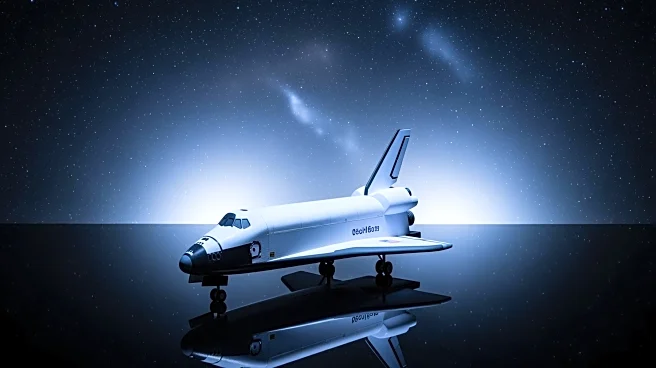

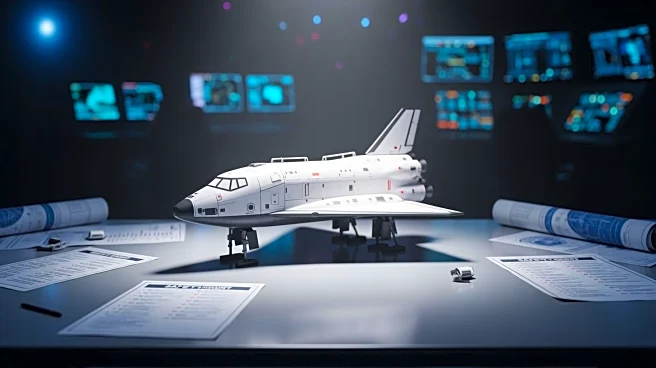

The STS-67 mission, launched on March 2, 1995, marked a significant milestone in the history of the Space Shuttle Endeavour. As the longest flight of Endeavour, this mission showcased the shuttle's capabilities and contributed to its legacy in space exploration. This article explores the importance of STS-67 in the context of Endeavour's journey and its impact on the Space Shuttle program.
Endeavour's Role in the STS-67 Mission
Space Shuttle Endeavour, designated as OV-105, was the fifth
and final operational shuttle built by NASA. It embarked on its first mission in May 1992 and quickly became an integral part of the Space Shuttle program. The STS-67 mission was a testament to Endeavour's capabilities, as it successfully carried out a complex and extended mission.
During STS-67, Endeavour was equipped with the Astro-2 Spacelab, which included three unique instruments designed for ultraviolet astronomical observations. The mission lasted for nearly 17 days, making it the longest flight of Endeavour and the longest flight overall not flown by Columbia. This extended duration allowed for comprehensive data collection and experimentation.
Achievements and Contributions to Space Exploration
The STS-67 mission was notable for its scientific achievements and contributions to space exploration. The Astro-2 Spacelab conducted observations in the ultraviolet spectral regions, providing valuable data on celestial objects such as stars, nebulae, and galaxies. This data supplemented the findings from the previous Astro-1 mission, expanding the understanding of the universe.
Endeavour's role in the STS-67 mission demonstrated its reliability and versatility as a space shuttle. The successful completion of the mission highlighted the shuttle's ability to support complex scientific experiments and extended spaceflights, reinforcing its importance in the Space Shuttle program.
Legacy and Impact on Future Missions
The legacy of the STS-67 mission continues to influence current and future space missions. The data collected during this mission has contributed to a deeper understanding of the universe, paving the way for more advanced astronomical studies. The experiments conducted have also provided insights into improving spacecraft design and control systems, ensuring safer and more efficient space travel.
Endeavour's successful execution of the STS-67 mission solidified its place in the history of space exploration. The mission's achievements and contributions have left a lasting impact on the Space Shuttle program, inspiring future generations of scientists and engineers to continue exploring the cosmos.