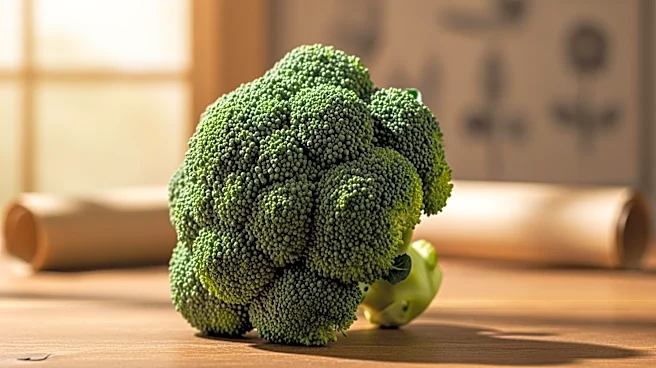

Broccoli, a staple in many diets today, has a rich history that traces back over two millennia. Originating from the Mediterranean region, this green vegetable has traveled across continents, adapting
and evolving through the ages. Its journey from ancient cultivation to modern-day popularity is a testament to its versatility and nutritional value.
Origins in the Mediterranean
Broccoli's story begins in the northern Mediterranean, where it was developed from wild cabbage. This process started around the sixth century BCE, with primitive cultivars being grown during the Roman Empire. The early forms of broccoli were likely improved through artificial selection in the southern Italian Peninsula or Sicily. This region's climate and soil conditions were ideal for cultivating the Brassica oleracea species, to which broccoli belongs.
The word "broccoli" itself is derived from the Italian plural of "broccolo," meaning "the flowering crest of a cabbage." This etymology reflects its close relationship with other members of the cabbage family. By the 17th century, the term had entered the English language, marking the beginning of its spread beyond Italy.
Expansion Across Europe and North America
Broccoli's journey continued as it spread to northern Europe by the 18th century. It was during this time that the vegetable began to gain recognition outside its native region. The introduction of broccoli to North America occurred in the 19th century, primarily through Italian immigrants who brought their culinary traditions with them.
The vegetable's popularity in the United States grew significantly after World War II. This was largely due to the development of F1 hybrids by American and Japanese breeders. These hybrids improved yields, quality, and growth speed, making broccoli more accessible and appealing to a broader audience. Cultivars such as 'Premium Crop,' 'Packman,' and 'Marathon' became widely grown, contributing to broccoli's status as a common vegetable in American households.
Modern Cultivation and Global Impact
Today, broccoli is cultivated worldwide, with China and India leading in production. In the United States, California is the primary producer, growing broccoli year-round. The vegetable's adaptability to different climates and its nutritional benefits have solidified its place in global agriculture.
Broccoli is not only valued for its taste but also for its health benefits. It is a rich source of vitamins C and K, and its sulfur-containing compounds are preserved through cooking methods like steaming and stir-frying. These attributes have made broccoli a favorite among health-conscious consumers.
The historical journey of broccoli from the Mediterranean to global kitchens highlights its enduring appeal and adaptability. As it continues to be a dietary staple, broccoli's legacy as a nutritious and versatile vegetable remains strong.