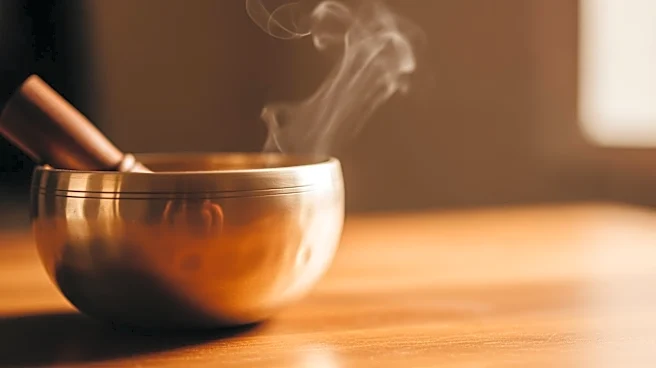





Tibetan singing bowls have become synonymous with new-age music, a genre that emerged in the United States during the 1970s. These bowls, despite their name, are not traditional Tibetan instruments but have been embraced by Western culture as a symbol of spiritual and meditative music. This article delves into the role of Tibetan singing bowls in the development of new-age music and their impact on the genre.
The Introduction of Singing Bowls to New-Age Music
The introduction of Tibetan singing bowls
to new-age music can be traced back to the 1970s, a period marked by a growing interest in alternative spiritual practices and holistic wellness. The bowls were popularized by musicians like Henry Wolff and Nancy Hennings, whose 1971 album "Tibetan Bells" showcased the unique sounds of these instruments. This album played a pivotal role in establishing the bowls as a key element of new-age music.
The appeal of Tibetan singing bowls lies in their ability to produce soothing, resonant tones that are believed to promote relaxation and meditation. This aligns perfectly with the goals of new-age music, which seeks to create a calming and introspective listening experience. As a result, the bowls quickly became a staple in the genre, used by musicians to evoke a sense of peace and spiritual connection.
The Evolution of New-Age Music
As new-age music evolved, Tibetan singing bowls remained a central feature, symbolizing the genre's focus on spirituality and inner peace. The bowls' association with Tibetan culture, albeit inaccurately, added an exotic and mystical element to the music, enhancing its appeal to Western audiences seeking alternative spiritual experiences.
The genre's growth in the 1980s and beyond saw the incorporation of various world music elements, with Tibetan singing bowls often featured alongside other traditional instruments. This fusion of sounds helped to broaden the genre's appeal and solidify its place in the music industry. The bowls' distinctive tones became a hallmark of new-age music, contributing to its unique soundscape.
The Lasting Impact of Singing Bowls
Today, Tibetan singing bowls continue to be a symbol of new-age music, representing the genre's commitment to creating a tranquil and meditative atmosphere. Their use has expanded beyond music, finding a place in wellness practices, yoga, and meditation sessions worldwide.
The bowls' enduring popularity highlights their significance as cultural symbols, transcending their modern origins to become an integral part of the new-age movement. While their association with traditional Tibetan culture may be a misconception, their impact on new-age music is undeniable. Tibetan singing bowls have helped shape the genre, offering listeners a gateway to relaxation and spiritual exploration through sound.