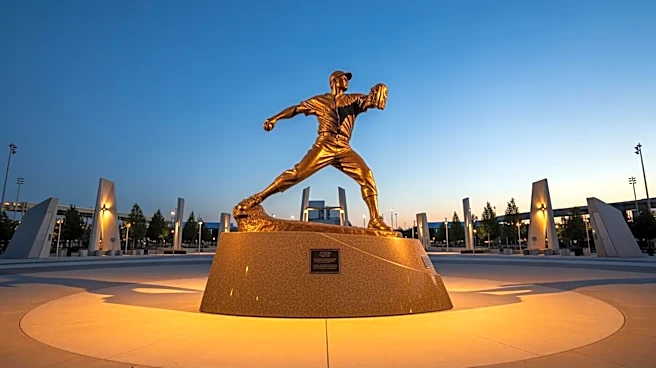

Cy Young's perfect game on May 5, 1904, stands as a pivotal moment in the history of Major League Baseball (MLB). This achievement was not only a testament to Young's exceptional skill but also marked
a significant milestone in the evolution of baseball. As the third perfect game in MLB history and the first under modern rules, Young's performance is often regarded as the first true perfect game, setting a new standard for excellence in the sport.
The Game and Its Context
On that day, Cy Young pitched for the Boston Americans against the Philadelphia Athletics at Huntington Avenue Grounds in Boston, Massachusetts. The game drew an impressive attendance of 10,267, the largest regular-season crowd in the stadium's history. Fans were eager to witness the duel between Young and Rube Waddell, another top pitcher of the era. Young's perfect game was part of a remarkable streak of 45 consecutive scoreless innings, which included 24 innings without allowing a hit—a record that still stands.
The concept of a perfect game was not widely recognized at the time, and sports writers offered varied perspectives on Young's achievement. Despite this, the significance of his performance was undeniable, as it demonstrated the potential of the modern rules established in 1903. These rules included changes such as the pitching distance and the introduction of the pitcher's mound, which fundamentally shaped the game as we know it today.
Key Moments and Challenges
Throughout the game, Young faced several challenging at-bats that could have disrupted his perfect streak. Monte Cross's pop-up in the third inning required a swift catch by right fielder Buck Freeman, while Ollie Pickering's ground ball in the seventh inning was expertly handled by shortstop Freddy Parent. These moments highlighted the precision and teamwork necessary to achieve a perfect game.
Young's control and focus were evident as he struck out eight batters and maintained composure under pressure. The final out, a fly ball caught by center fielder Chick Stahl, was met with a roar from the crowd, celebrating Young's historic accomplishment. The game lasted just 1 hour and 23 minutes, showcasing the efficiency and skill of Young's pitching.
Legacy and Impact
Cy Young's perfect game left a lasting legacy in the world of baseball. His career statistics, including 511 wins and 749 complete games, solidified his reputation as one of the greatest pitchers in MLB history. Young was inducted into the National Baseball Hall of Fame in 1937, and his name continues to be synonymous with pitching excellence.
The introduction of the Cy Young Award in 1956, a year after his death, further cemented his impact on the sport. This award is given annually to the best pitcher in both the American League and the National League, honoring Young's contributions and setting a benchmark for future generations of pitchers.