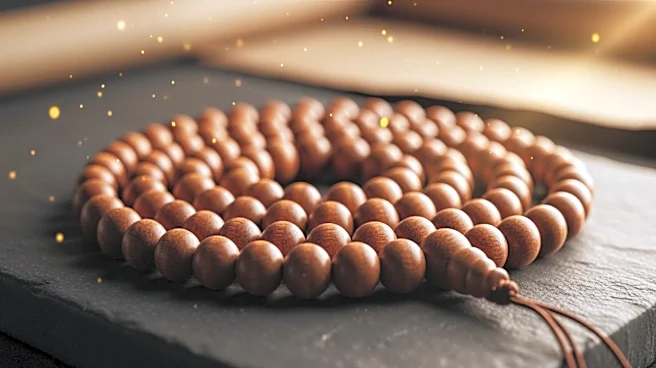




Mala beads, known as japamala in Sanskrit, have a rich history that spans several centuries and cultures. These prayer beads are primarily used in Indian religions such as Hinduism, Buddhism, Jainism, and Sikhism for counting recitations of mantras and prayers. While their exact origin is unknown, the use of beads for spiritual purposes is a widespread practice that has evolved over time.
Ancient Origins and Spread
The earliest references to mala beads are found in Indian religious
texts and art, where they are depicted as part of the garb of deities and worshippers. However, it is difficult to distinguish them from decorative necklaces or garlands in early depictions. The first clear evidence of mala beads being used for recitation comes from a bodhisattva image created during the Northern Wei dynasty in China, where the mala is held in the hand rather than worn.
The practice of using mala beads spread to China with the introduction of Buddhism during the Han dynasty. Although no references to malas occur in Chinese literature before this period, their use became common among Buddhist monks and lay practitioners. By the 7th century CE, images of monks with malas began to appear in China, indicating their widespread adoption in monastic practice.
Cultural Adaptations and Regulations
As mala beads gained popularity, they began to be valued for their aesthetic qualities as well as their spiritual use. During the Ming dynasty, malas became fashionable accessories among the Chinese court, with sumptuary laws regulating the materials used for different grades of wives and concubines. This reflects the dual role of malas as symbols of spirituality and status.
In India, different religious communities favored specific materials for their malas. Saivas, devotees of Shiva, used beads made from the fruitstones of the rudraksha tree, while Vaishnavas, followers of Vishnu, preferred beads made from tulsi wood. These materials were chosen for their spiritual significance and believed to enhance the practitioner's connection to the divine.
Modern Usage and Materials
Today, mala beads are made from a wide range of materials, including synthetic options like plastic and glass. While traditional materials such as wood, stone, and seeds are still favored for their spiritual properties, modern malas offer a wider variety of choices for practitioners. The strings used to hold the beads together can be made from natural fibers like cotton, silk, or animal hair, or from synthetic materials like nylon.
Despite changes in materials and design, the spiritual significance of mala beads remains central to their use in religious practices. Whether used for counting recitations or worn as a symbol of religious identification, mala beads continue to serve as a tangible connection to ancient traditions and spiritual practices.