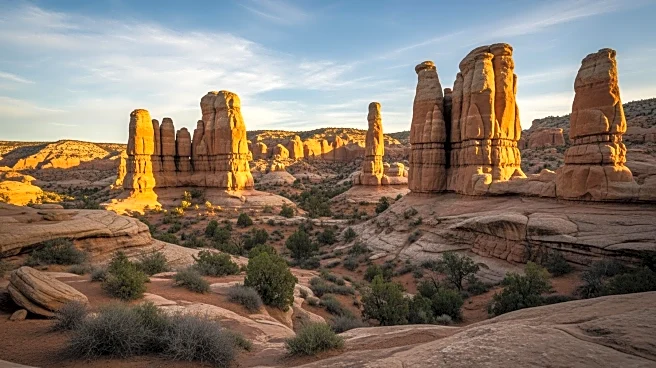




Bryce Canyon National Park, located in southwestern Utah, is a testament to the natural beauty and geological diversity of the region. The park was established as a national monument in 1923 and later designated as a national park in 1928. Its history is rich with stories of exploration, settlement, and conservation efforts that have shaped the park into what it is today.
Early Exploration and Settlement
The area that is now Bryce Canyon National Park was first explored by European
Americans in the late 18th and early 19th centuries. Mormon pioneers settled in the region in the 1850s, drawn by the potential for agriculture and grazing. One of the most notable settlers was Ebenezer Bryce, a Scottish immigrant who homesteaded in the area in 1874. Bryce's name would later become synonymous with the park, as the canyon at the end of his road was referred to as "Bryce's Canyon."
Ebenezer Bryce's contributions to the area included building a road to access timber and a canal to irrigate crops. Despite the challenges of drought and flooding, the settlers persevered, and the area gradually became more developed. However, it was the unique geological formations that would eventually draw national attention to the region.
The Path to National Park Status
The scenic beauty of Bryce Canyon's amphitheaters and hoodoos began to attract visitors in the early 20th century. Articles published by the Union Pacific and Santa Fe railroads in 1916 helped to generate public interest in the area. Conservation advocates became concerned about the impact of overgrazing, logging, and unregulated visitation, leading to efforts to protect the canyon.
In 1923, President Warren G. Harding established Bryce Canyon as a national monument. This designation marked the beginning of a concerted effort to preserve the area's natural wonders. A road was built to provide access to the park's scenic overlooks, and in 1924, Bryce Canyon Lodge was constructed to accommodate visitors.
The Establishment of Bryce Canyon National Park
The push to upgrade Bryce Canyon's status from a national monument to a national park gained momentum in the mid-1920s. Members of the United States Congress worked to transfer ownership of private and state-held land to the federal government. By 1928, the necessary land acquisitions were complete, and Bryce Canyon National Park was officially established.
Over the years, the park has continued to grow and evolve. In 1931, President Herbert Hoover annexed additional land to the park, and further expansions occurred in the following decades. Today, Bryce Canyon National Park covers over 35,000 acres and attracts millions of visitors each year, drawn by its breathtaking landscapes and rich history.