




Pull-ups are a staple in upper-body strength training, known for their ability to build muscle and enhance endurance. This exercise involves suspending the body by the hands and pulling oneself up, engaging various muscle groups in the process. Understanding the anatomy of a pull-up can help individuals maximize their workout and prevent injury.
Muscle Groups Engaged
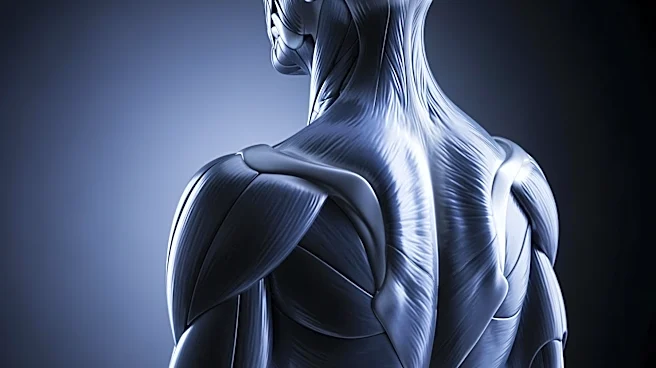
When performing a pull-up, several muscles in the upper body are activated. The latissimus dorsi, trapezius,
and biceps brachii are among the primary muscles worked during this exercise. The latissimus dorsi, located in the back, is responsible for the adduction and extension of the shoulder joint, playing a crucial role in the upward movement of the pull-up.
The trapezius, another significant muscle, is involved in the initial phase of the pull-up. It helps stabilize the shoulder blades and assists in the upward motion. The biceps brachii, located in the upper arm, flexes the elbow, contributing to the pulling action. These muscles work in harmony to lift the body towards the bar.
Variations and Their Impact
Pull-ups can be performed with different hand positions, each affecting muscle activation. An overhand grip, known as a pronated grip, tends to activate the middle trapezius more than a neutral grip. Conversely, a supinated grip, often referred to as a chin-up, emphasizes the biceps brachii.
The width of the grip also plays a role in muscle engagement. A wider grip can increase the challenge by lengthening the lever arm, potentially reducing the number of repetitions. However, it may also increase the risk of injury if not performed correctly. Choosing the right grip and width can tailor the exercise to target specific muscles more effectively.
Movement Mechanics
The mechanics of a pull-up involve a closed-chain movement, where the body is suspended and pulled up vertically. The elbows flex, and the shoulders adduct and extend to bring the elbows to the torso. This movement pattern is similar to the pull-down exercise, which uses external weights.
At the start of the pull-up, muscles like the trapezius and infraspinatus are most active. As the movement progresses, the latissimus dorsi and teres major reach peak activity. At the top of the pull-up, the triceps brachii and subscapularis experience maximum activity. Understanding these mechanics can help individuals perform pull-ups more efficiently and safely.