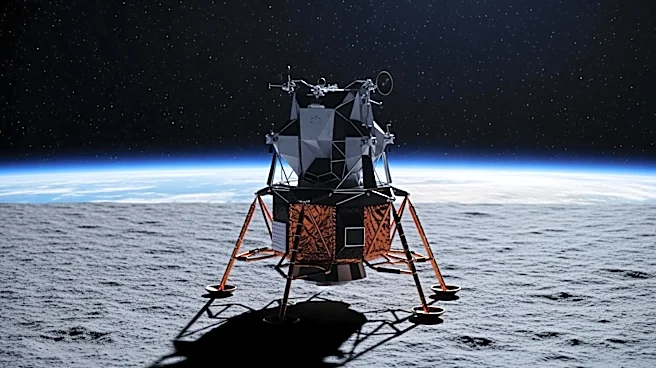







Apollo 16 stands as a testament to human ingenuity and the relentless pursuit of knowledge. As the fifth mission to land humans on the Moon, it played a crucial role in advancing our understanding of lunar science and space exploration. This article explores the legacy of Apollo 16 and its enduring impact on the field of space exploration.
Advancements in Lunar Science
Apollo 16's contributions to lunar science were significant and far-reaching. The mission's exploration of the
Descartes Highlands provided new insights into the Moon's geological history. The discovery that the highlands were formed by impact processes, rather than volcanic activity, challenged existing theories and reshaped our understanding of the Moon's evolution.
The scientific instruments deployed during the mission, such as the seismometer and magnetometer, provided valuable data that continue to inform lunar research. These findings have been instrumental in developing new models of the Moon's internal structure and magnetic history. Apollo 16's scientific achievements laid the groundwork for future lunar exploration and research.
Influence on Future Missions
The success of Apollo 16 had a profound impact on subsequent space missions. The mission demonstrated the importance of human exploration in scientific discovery, highlighting the unique capabilities of astronauts to conduct fieldwork and make real-time observations. This human element remains a key consideration in planning future lunar and planetary missions.
Apollo 16 also showcased the effectiveness of the Lunar Roving Vehicle, which allowed astronauts to travel further and conduct more extensive scientific experiments. The rover's success influenced the design of future exploration vehicles, including those planned for upcoming missions to the Moon and Mars.
A Legacy of Inspiration
Beyond its scientific and technological achievements, Apollo 16 left a lasting legacy of inspiration. The mission captured the imagination of people around the world, showcasing the possibilities of human exploration and the pursuit of knowledge. It served as a reminder of what humanity can achieve when we work together towards a common goal.
The legacy of Apollo 16 continues to inspire new generations of scientists, engineers, and explorers. Its achievements have paved the way for future missions and have contributed to the ongoing exploration of our solar system. As we look to the future, the lessons learned from Apollo 16 will continue to guide and inspire us in our quest to explore the unknown.
In conclusion, Apollo 16 was a milestone in the history of space exploration. Its legacy is one of scientific discovery, technological innovation, and inspiration. The mission's impact continues to be felt today, as we build on its achievements to explore new frontiers in space.