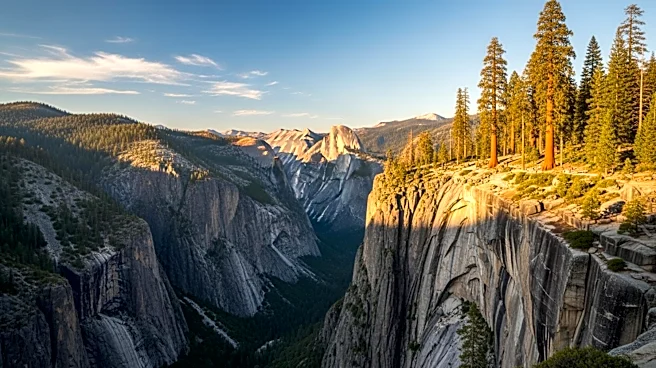





Kings Canyon National Park, nestled in California's Sierra Nevada, has a rich history that dates back to its establishment in 1940. The park, covering 1,869 square kilometers, is jointly managed with Sequoia National Park. Its creation was a significant milestone in the conservation of natural landscapes in the United States, preserving its unique geological features and diverse ecosystems for future generations.
Early History and Establishment
The area now known as Kings Canyon
National Park was originally inhabited by Native American tribes, who used the mountain passes as trade routes. As European settlers arrived in California, the indigenous population faced challenges due to the spread of diseases and the exploitation of natural resources. Despite these challenges, the beauty and ecological significance of the region eventually led to efforts to preserve it.
Kings Canyon National Park was established in 1940, following the abolition of General Grant National Park by President Roosevelt. The park's creation was driven by the need to protect its unique landscapes from threats such as logging and reservoir construction. The park's establishment marked a turning point in the conservation of the Sierra Nevada, ensuring that its natural beauty would be preserved for future generations.
Joint Management with Sequoia National Park
In 1943, Kings Canyon National Park was administratively combined with Sequoia National Park, creating a consolidated management structure. This joint administration allowed for more efficient management of the parks' resources and facilitated the protection of their shared ecosystems. The combined parks cover a vast area of 3,500 square kilometers, making them one of the largest protected areas in the United States.
The joint management of Kings Canyon and Sequoia National Parks has been instrumental in preserving their natural and cultural heritage. The parks are home to a wide variety of plant and animal species, as well as significant archaeological sites. The National Park Service continues to work towards maintaining the parks' ecological integrity while providing opportunities for public enjoyment and education.
Conservation Efforts and Challenges
Throughout its history, Kings Canyon National Park has faced various conservation challenges. The park's administration has implemented measures to address issues such as wildfire suppression and air pollution, which have impacted its ecosystems. Controlled burns are conducted regularly to reduce the risk of forest fires, while efforts are made to minimize the effects of pollution on the park's flora and fauna.
Illegal activities, such as marijuana cultivation, have also posed threats to the park's environment. These activities can lead to habitat destruction and waterway contamination, prompting the park's administration to take action to protect its natural resources. Despite these challenges, Kings Canyon National Park remains a vital conservation area, dedicated to preserving its unique landscapes and biodiversity.